Can AI Agents Access Your Bank Account?

Can AI agents access your bank account? See what JPMorgan blocks, what read-only sharing allows, and how to keep payment approval in your hands.
Can AI agents access your bank account? Sometimes they can read limited information with your authorization, but that is different from logging in as you and moving money. On October 13, 2026, JPMorgan told CNBC it blocks outside agents from operating retail accounts with customers’ banking credentials while supporting secure, authorized data sharing. The distinction matters before you ask an assistant to chase a bill or find a better savings rate.
Mateo· built by the Zentor team
Handle the bill reminder, not the bank login
Mateo checks your inbox and calendar, finds the trial, the refund and the form you forgot, and handles them. Works in any browser, anywhere.
Ask Mateo →
Free in early access
Key Takeaways
- JPMorgan's restriction targets outside agents operating retail accounts, particularly by using a customer's login; it is not a ban on every use of AI.
- Authorized account-data sharing and permission to send a payment are different grants.
- Treat an agent's promise to obey a prompt as weaker than a limit enforced by the bank or payment service.
What JPMorgan actually said
On its third-quarter earnings call, CEO Jamie Dimon said the bank was not going to allow “just any outside agent” inside its systems because of the risk to customers and JPMorgan. He warned of “rogue agents” potentially numbering in the thousands. CFO Jeremy Barnum said some services offering money movement use credential sharing and that, to the extent the bank can block those routes, it does.
A bank spokesperson drew a narrower operational line in CNBC's report: third parties may not obtain customers' banking credentials, log in and operate accounts on their behalf. The bank supports secure, customer-authorized sharing through open-banking providers. It gave no date for allowing outside agents to interact directly with accounts. Those are different claims from “AI cannot see a Chase balance.”
Reading an account is not operating it
An authorized connector may expose selected account data such as a balance in a read-only flow, as CNBC reported. That does not authorize the agent to transfer money or pay a bill. An account summary also does not tell you what permissions another app might already have, so check the particular connection rather than assuming every financial integration is read-only.

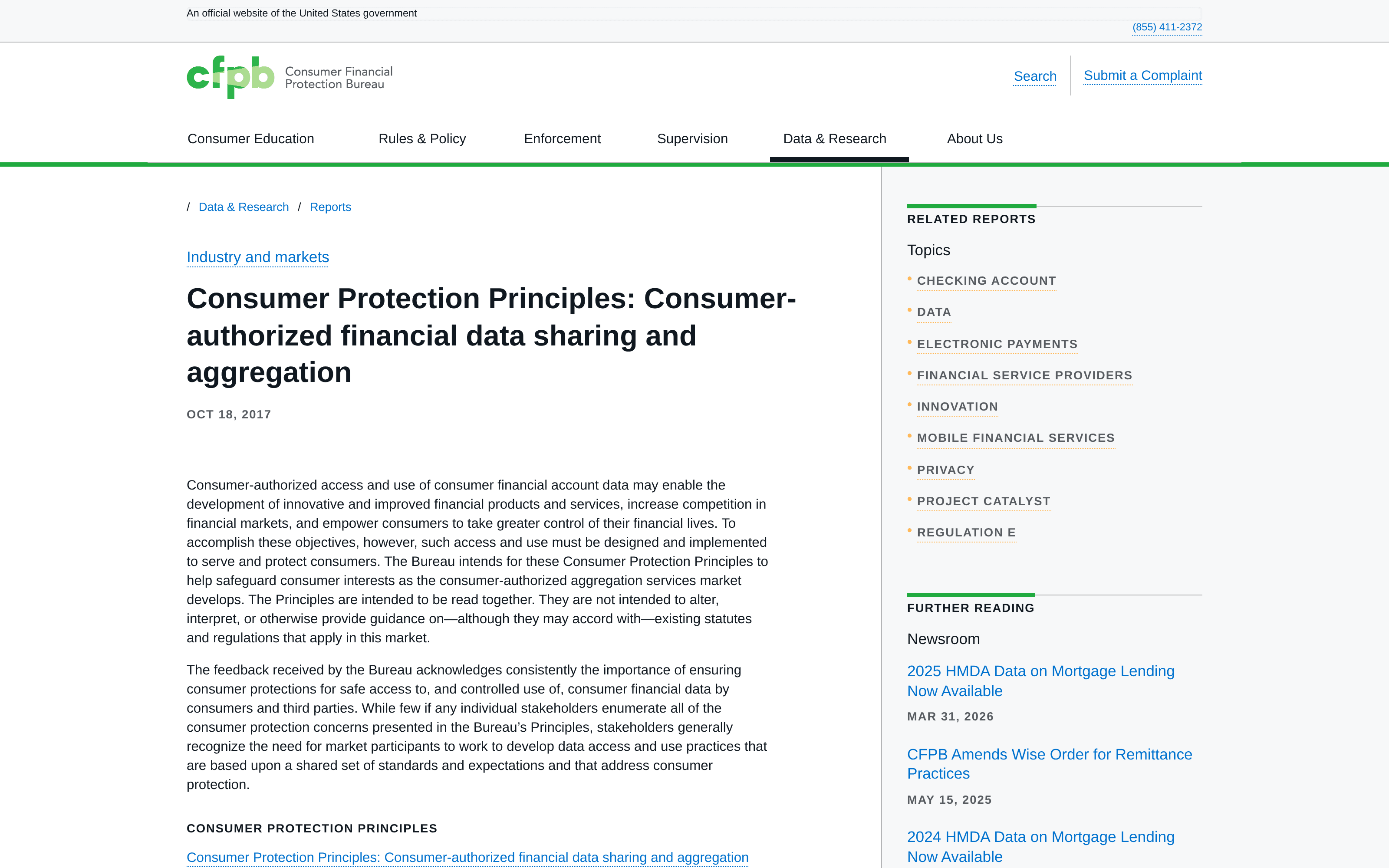
The CFPB's consumer-authorized data-sharing principles help explain the distinction between access to data and the separate question of transaction authority. They are principles, not a binding ruling on a particular agent or bank. A bill-due reminder can be useful without giving an assistant the ability to press Pay. So when you ask “can AI agents access your bank account?”, specify whether you mean reading data or authorizing a transaction.
What “liability transfer” does and does not settle
Dimon said customers who use outside agents should understand the risk: “There's a liability transfer.” Barnum said handing an agent your credentials and then seeing an unwanted action is “not an ideal state of things.” Both statements appear in the earnings-call transcript. They describe the bank's warning, not a final legal decision that any particular customer loses reimbursement rights. The outcome of a dispute depends on the facts, agreements and applicable law; this article cannot decide it.
The practical problem is simpler. If an app asks for your bank username and password rather than a bank-mediated connection, you are giving it a way to impersonate you. If your request was “check whether the rent went through,” that access may be far wider than the task requires. Refuse the mismatch, even if the assistant's demo looks polished.

Why a good prompt is not a payment control
In a September 29 J.P. Morgan Payments article, Zack Anderson writes: “A prompt expresses intent; it does not enforce authority.” His proposed design puts an independent policy check between a proposed payment and execution, on a path the agent cannot bypass. The article concerns payments-system design; it does not establish that the same controls are already deployed on Chase retail accounts.
For a customer, the test is concrete: where does the limit live? An assistant's instruction to “ask before paying” is not equivalent to a payment service that refuses the action without your separate authorization. Keep the payment decision in a system with enforceable limits and a human review point. Zentor's user-owned workspace memory, which can connect to different AI through Zentor MCP, is useful for retaining the context of a task; it is not a bank authorization layer or a Chase connection.
What this means for personal agents
CNBC put Muse and Instinct in its headline and discussed OpenAI's Dots in the story. That is context for the new breed of personal assistants, not evidence that JPMorgan tested or individually banned each named product. Ask the provider what data it reads, how authorization is granted and what happens before any money moves. Keep vague providers out of the account.
There is still a useful job short of banking access. You might need an assistant to notice that an invoice email is overdue, find a subscription renewal in your inbox or surface a missed form in your calendar. Mateo, built by the Zentor team, focuses on that inbox-and-calendar life admin. That does not establish bank connectivity or authority to pay; complete sensitive financial actions through your own verified channel.
Why JPMorgan's Smart Cash is different
Barnum described Smart Cash as live in a targeted pilot, not a public feature available to every Chase customer. CNBC says the bank is testing a tool to forecast cash flow and move funds to improve yield. Its pilot is not evidence that outside agents have the same permissions or protections.
A safer way to delegate the surrounding work
Start with the smallest job. For “tell me when an invoice is due,” email or calendar context may suffice; bank access does not follow. For “help me review spending,” use a documented, customer-authorized data connection only if you actually need it, inspect its scope and disconnect it when finished. As Plaid explains, disconnecting an app stops future sharing through Plaid without erasing data the app already received; check the provider's retention policy as well. Keep actual payment approval with you and the bank.
BankMCP's read-only banking approach illustrates a narrower design, but its European PSD2 context does not show that Chase supports it. If several assistants need your work context, Zentor's portable workspace memory via MCP offers a different layer from account permissions; agent orchestration still requires a separate decision about each connected service. Zentor does not connect to Chase on the evidence available here and does not move money for you. The best agent for this task may be the one that stops at a clear boundary.
Keep work context without sharing a bank login
Zentor keeps your workspace memory yours and connects it to different AI through MCP. It is not a banking connector or payment approver.
Get early access →
FAQ
Can AI access my bank account?
With your authorization, some services can read limited account data through supported connectors. That depends on the bank, app and permissions; read access does not permit transfers.
Did JPMorgan ban AI agents?
No blanket ban on using AI was announced. The bank says it blocks outside agents from operating retail accounts via customers' banking credentials while supporting customer-authorized data sharing.
Should I give an AI agent my bank login?
Avoid giving it your username and password. Ask whether a bank-supported, appropriately scoped connection exists, and keep payment approval within a trusted payment channel.

Zentor Editorial Zentor editorial team
The Zentor editorial team writes about workflow automation, AI agents, and the tools we build. Default byline for industry overviews, listicles, and collaborative pieces.
Ready to put this into practice?
Zentor runs browser tasks, research, and schedules automatically. Try it free.