Copilot Studio Retires GPT-5.3 & 5.4: Agents Auto-Migrate
Copilot Studio model retirement moves GPT-5.3 Chat and GPT-5.4 Reasoning agents on October 15. Check affected agents, replacements, risks and tests.
Copilot Studio model retirement reaches GPT-5.3 Chat and GPT-5.4 Reasoning on October 15, 2026: Standard-harness agents configured with either model move automatically to GPT Chat Latest. The switch preserves a supported model setting, not a guarantee that answers or actions stay the same. As of October 2026, MC1506813 reproduced by ChangeCockpit names both models and the date.
Key Takeaways:
- GPT-5.3 Chat and GPT-5.4 Reasoning on the Standard harness move to GPT Chat Latest on October 15.
- A separate November 12 wave covers older Standard models and selected GitHub Copilot-harness models, with different destinations.
- Compare real conversations, tool calls, latency and Copilot Credit consumption against a baseline.
- The Power Platform admin center's Model column or inventory API can locate affected agents; unpublished model changes may not appear yet.
What MC1506813 changes on October 15
The MC1506813 announcement maps GPT-5.3 Chat and GPT-5.4 Reasoning to GPT Chat Latest, both on the Standard harness. Starting October 15, 2026, Microsoft says those selected models will no longer be available and configured agents will migrate automatically. It does not claim every agent is affected or that replacement responses will be identical.
Suppose your agent submits a refund through a flow. Save an old-model exchange while available: did it ask for confirmation, choose the right action and send the right parameters? A chat that still opens but skips confirmation hasn't passed a migration test.
Keep useful work separate from a model name
Zentor keeps workspace memory under your control and connects it to AI through MCP. It is not a Copilot Studio migration tool.
Get early access →
The November Copilot Studio retirement wave is different
MC1506318 reproduced by M365 Admin lists November 12, 2026 as the migration date. On the Standard harness, GPT-4.1, GPT-4.1 Mini, GPT-5 Chat, GPT-5 Auto and GPT-5 Reasoning are slated for GPT Chat Latest. On the GitHub Copilot harness, GPT-5 Chat goes to GPT 5.6 Terra, GPT 5.6 Sol to GPT 6 Sol, and GPT 5.6 Luna to GPT 6 Luna. The same model name can have a different destination depending on its harness.
For environments outside the US that restrict cross-geo data movement, the notice says GPT-4.1 and GPT-5 remain supported in this migration. Don't generalize that exception to every listed model or every non-US tenant.
GPT Chat Latest is a moving target, within limits
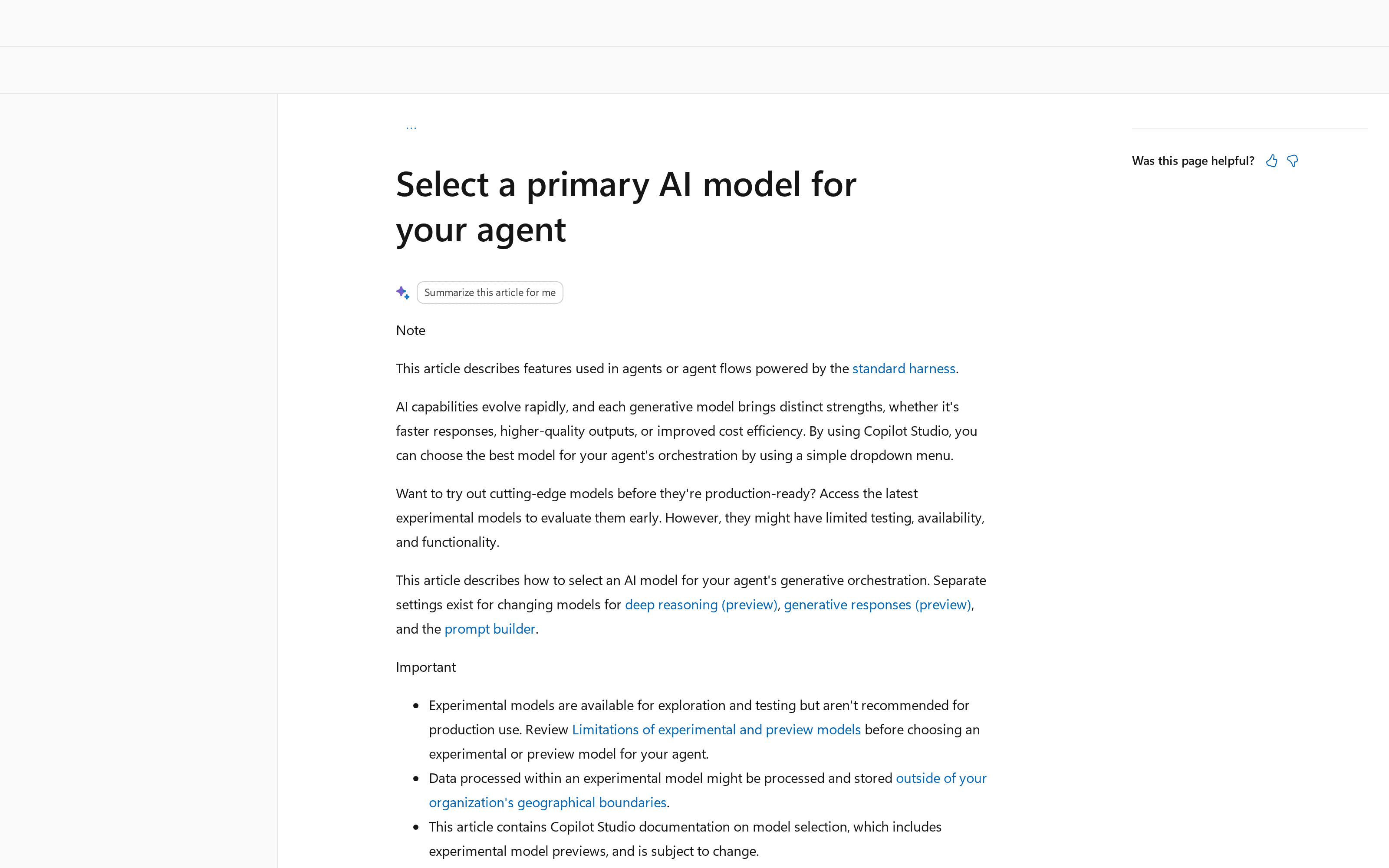
MC1506813's published text describes GPT Chat Latest as the Standard harness's supported chat option. It follows updated snapshots within the current major version. Microsoft says a move to a new major model version is a separate change with at least 30 days' notice. A snapshot is therefore not frozen indefinitely.
Check Microsoft's model selection documentation for regional availability and administrator controls; another tenant's model picker isn't evidence about yours.
Automatic agent migration does not preserve behavior
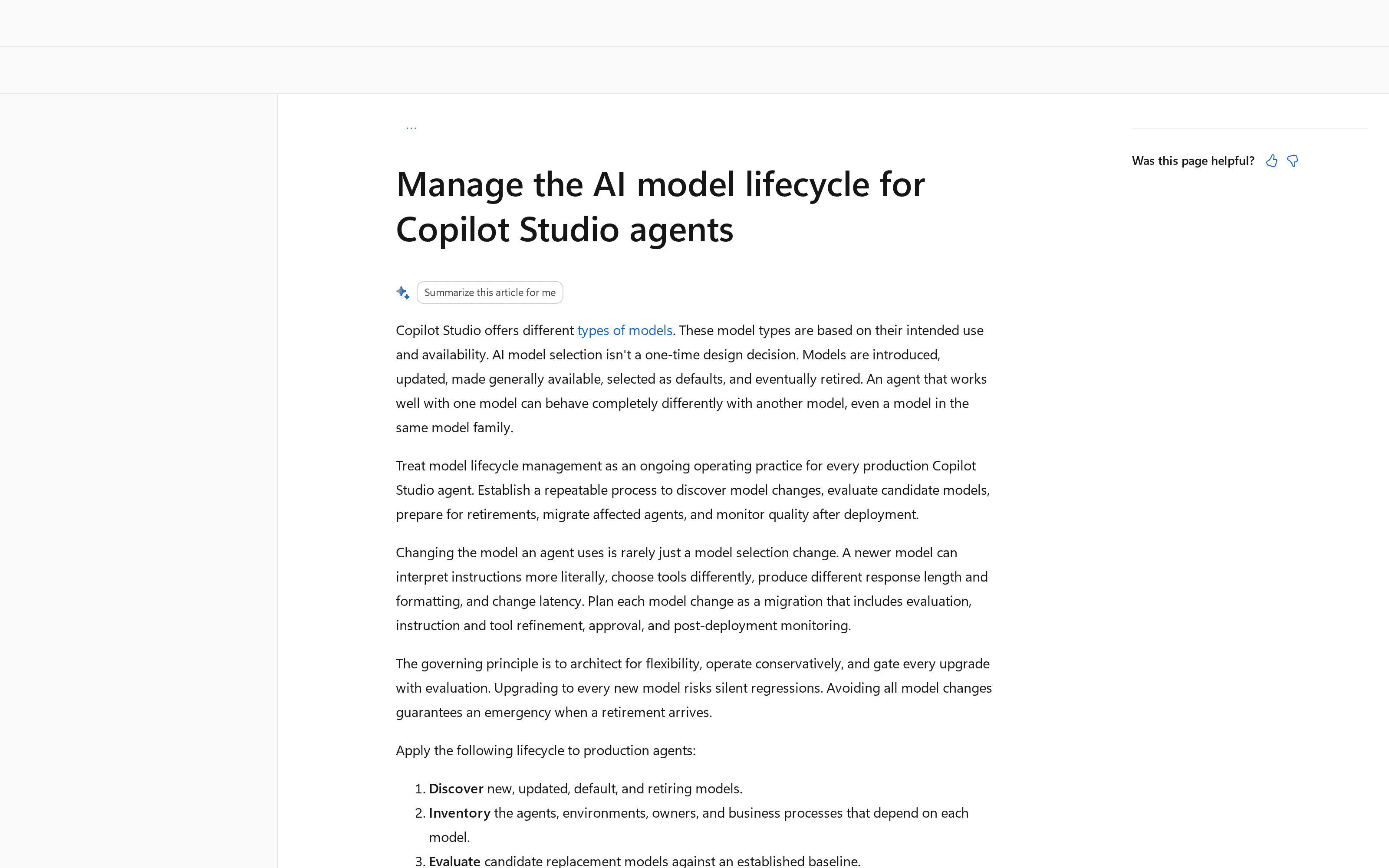
Microsoft's lifecycle guidance warns that a replacement can read instructions more literally, choose tools differently, alter response length or formatting and change latency. Suppose an employee asks an agent to amend a record. The old model requests clarification while its replacement immediately selects an update tool. A plausible final sentence won't reveal the altered action sequence. Check tool inputs and the activity map, not only the answer.
Microsoft advises measuring Copilot Credit consumption separately from evaluation scores. A consumption increase is a risk to test, not a documented price rise for this particular migration. Zentor's smart routing is a separate example of matching a model to the job; it does not change Copilot Studio's model assignment.
Find the affected agents before you test them
In Power Platform admin center, open Manage > Copilot Studio and inspect the Model column, grouping agents by harness and configured model. Microsoft's inventory guide says the model property is in preview and inventory reflects published configuration, not newer unpublished drafts. Ask makers about pending edits before marking an agent unaffected.
For a larger tenant, the official lifecycle guide describes an inventory API query for microsoft.copilotstudio/agents projecting properties.model and environment ID. It requires an administrator role and enabled inventory; paginate with skipToken if results truncate. Record owner, environment, harness and criticality alongside each model. Makers can use the admin-center view without writing API queries.
A pre-migration checklist for makers and admins
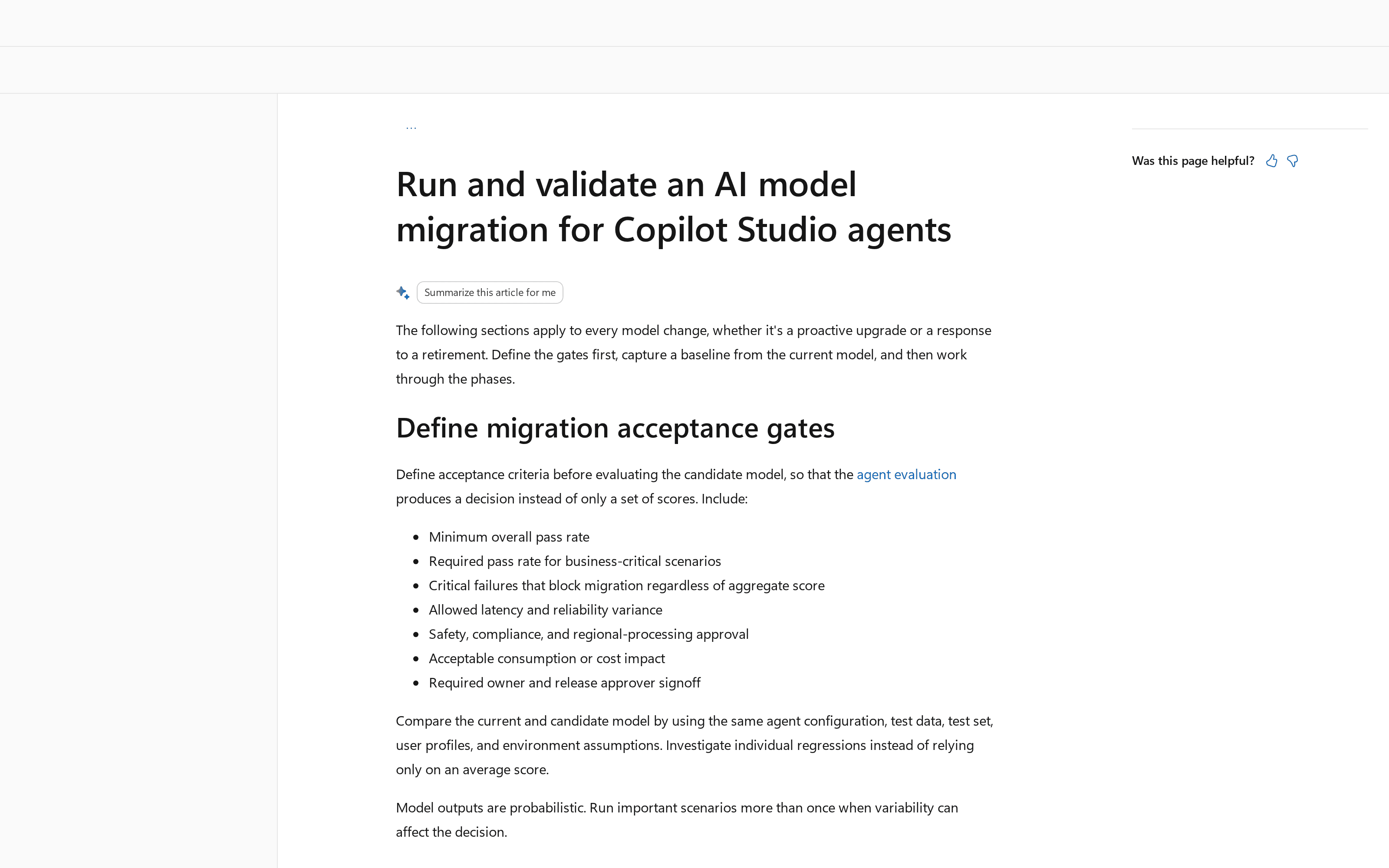
Microsoft's migration playbook starts with acceptance criteria and an old-model baseline.
- Confirm model, harness, migration date, regional exception and what the agent actually uses.
- Save current-model conversations for frequent and consequential cases. Preserve expected answers, refusals and tool calls under your data-handling policy.
- Run the same cases on the replacement in a representative test environment. Inspect confirmation gates, tool parameters, citations and formatting.
- Record latency, failures and Copilot Credit consumption separately. Agree with an owner what blocks approval, adjust instructions if needed, and retest.
- Monitor production behavior and add failures to the test set. If October 15 has passed in your tenant, don't pretend you can reconstruct an old-model baseline.
FAQ: Copilot Studio model retirement
Will my agent stop working on October 15?
MC1506813 says configured Standard-harness agents migrate automatically. That is not a planned service outage, nor a guarantee of identical behavior; validate consequential actions afterward.
Can I keep a retired model?
Microsoft's retirement response guidance describes a per-agent, 30-day retired-model compatibility option after an automatic upgrade. Check applicability in your agent's settings; it isn't permanent support.
What about GitHub Copilot-harness agents?
The October notice targets the Standard harness. The November notice lists different GitHub Copilot-harness replacements, including GPT 5.6 Terra for GPT-5 Chat. Verify the harness before applying either table.
How much notice for major-version moves?
Microsoft says a new major GPT Chat Latest version is a separate change with at least 30 days' notice. Updates within the major version are different. Watch your tenant notifications.
Keep the workflow portable, and the test evidence close
Treat each retirement as normal agent maintenance. An owner list and tested acceptance cases beat an improvised prompt edit. Our OpenAI shutdown checklist concerns a different platform; its API deadlines do not apply here. Zentor's workspace memory can follow you across AI tools through MCP, but Zentor does not administer Microsoft's agents. See the Zentor home page if you want to assess that separate portability choice.
Zentor Research Public data on the AI ecosystem
Zentor Research publishes quarterly data studies on the AI tools ecosystem, drawing on public registries (npm, GitHub, Hugging Face, arXiv, Google Trends). All charts and datasets ship under CC-BY 4.0.
Turn insights into action.
Zentor automates the recurring work your analysis points to. No engineering required.