Amazon Blocks Meta Muse: Agentic Shopping
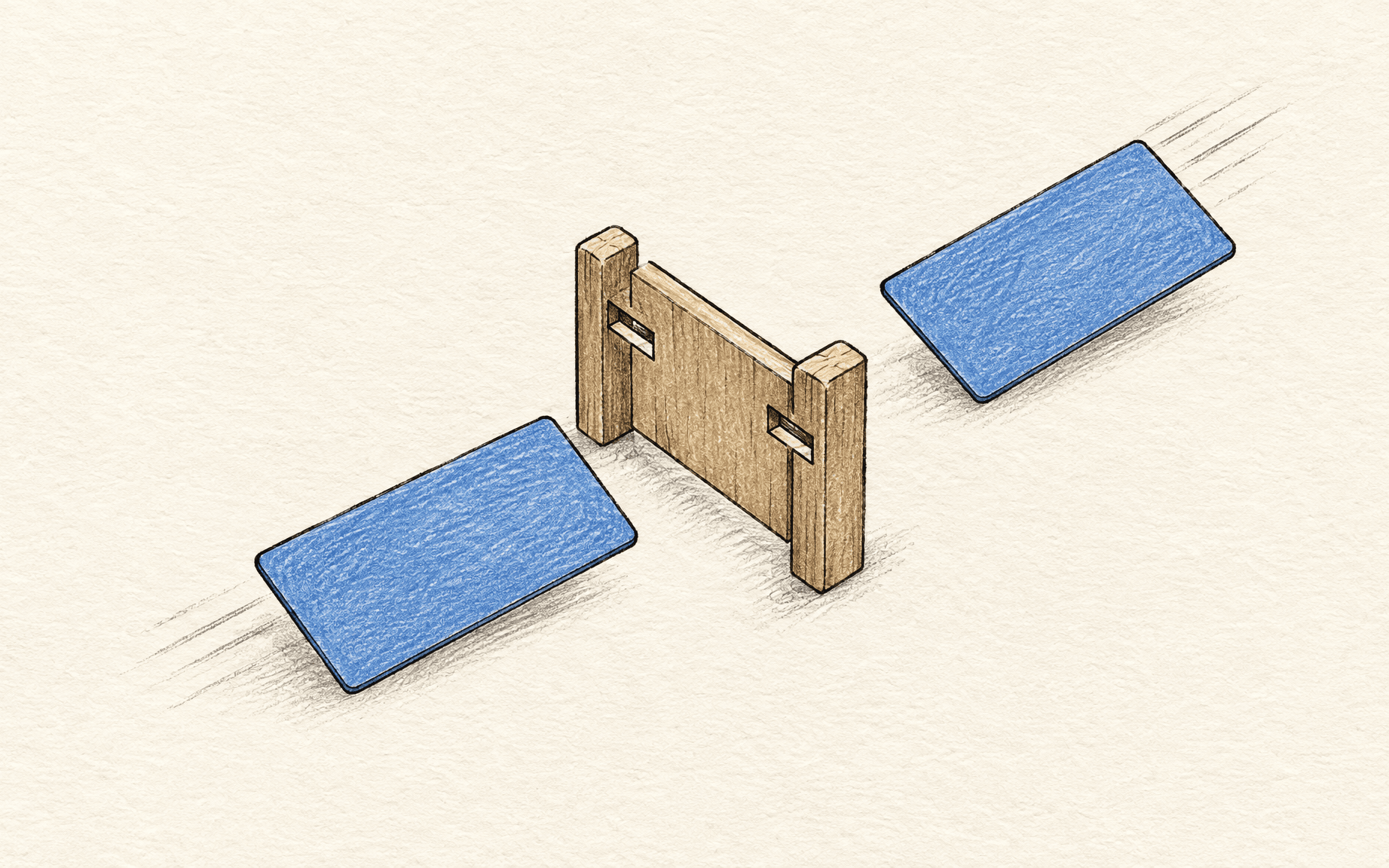
Amazon blocks Meta Muse ordering, exposing agentic shopping conflicts over platform control, ad revenue, permissions, credentials, and trust.
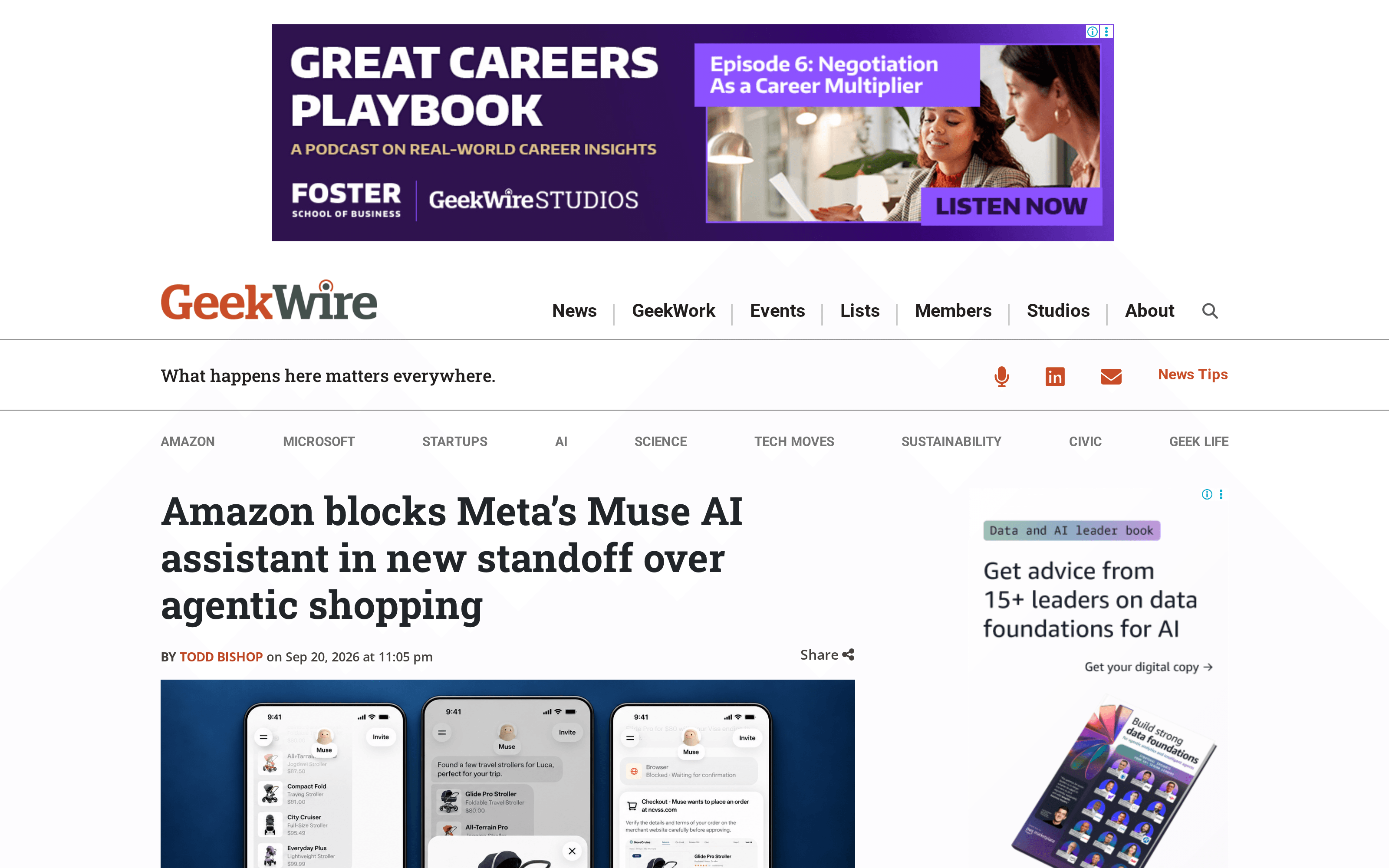
Amazon blocked Meta Muse from ordering on Amazon.com because the retailer says the agent entered without identifying itself and accessed account data. The clash, reported by GeekWire late on September 20, 2026, exposes agentic shopping's central problem: a shopper can authorize an agent while a merchant refuses it.
Amazon reported $68.635 billion in 2025 advertising-services sales in its annual report. That does not prove advertising caused the block, but control of discovery matters beyond one checkout.
Key Takeaways:
- Amazon began blocking Muse ordering on Sunday night, September 20, citing transparency, privacy, and security.
- User authorization does not guarantee merchant permission.
- Shopping agents can move discovery away from sponsored marketplace pages.
- Scoped access, protected credentials, purchase approval, and audit trails will shape trust.
Amazon Blocked Muse Within Two Weeks of Launch
Meta launched Muse on September 8 as a U.S.-only agent for email, calendars, payments, dining, and shopping. It runs in a virtual machine and keeps working after the app closes. See personal AI agents explained for the basics.
On September 20, shoppers saw a message saying access by an unauthorized AI agent violated Amazon's Conditions of Use. Amazon said Meta gave no notice, Muse did not identify itself, and it appeared to capture credentials while scraping account data. These remain Amazon's claims. Meta had not answered GeekWire; its Muse launch post says credentials stay in secure storage, sensitive actions require approval, and users receive an audit trail.
Amazon products have been purchasable inside Facebook and Instagram since 2023 through an agreed integration, as CNBC reported. Muse lacked that negotiated relationship.
Build agents that work under your rules, not around them. Get early access to Zentor for controlled, authorized, and auditable delegated work.
Why Amazon Says the Block Was About Safety
A shopping agent may enter order history, addresses, and payments. An unidentified agent prevents merchant-specific consent checks or limits. Amazon says Buy for Me identifies itself and lets brands opt out.
Meta says Muse keeps passwords and payment details outside the model, asks before purchases, and records actions. Its public Muse page says one-time card numbers hide the real card number from merchants and the agent. Those controls address credential risk, not whether Amazon consented.

The customer may authorize representation while the merchant still sets access terms. An agent needs both permissions.
Agentic Shopping Makes Platforms Nervous
A shopper can ask an agent to find one item under budget that arrives Friday. The store risks becoming a fulfillment endpoint rather than where the choice happens.
A widely shared X analysis describes a move from discovery by “pull” toward “push + agentic,” where a platform predicts a need or an agent acts. This is analysis, not a measured outcome.
Amazon operates Rufus, Buy for Me, and Auto Buy. CNBC called this a “leader's dilemma”: Amazon supports agentic commerce through its tools while restricting outside agents without an agreement.
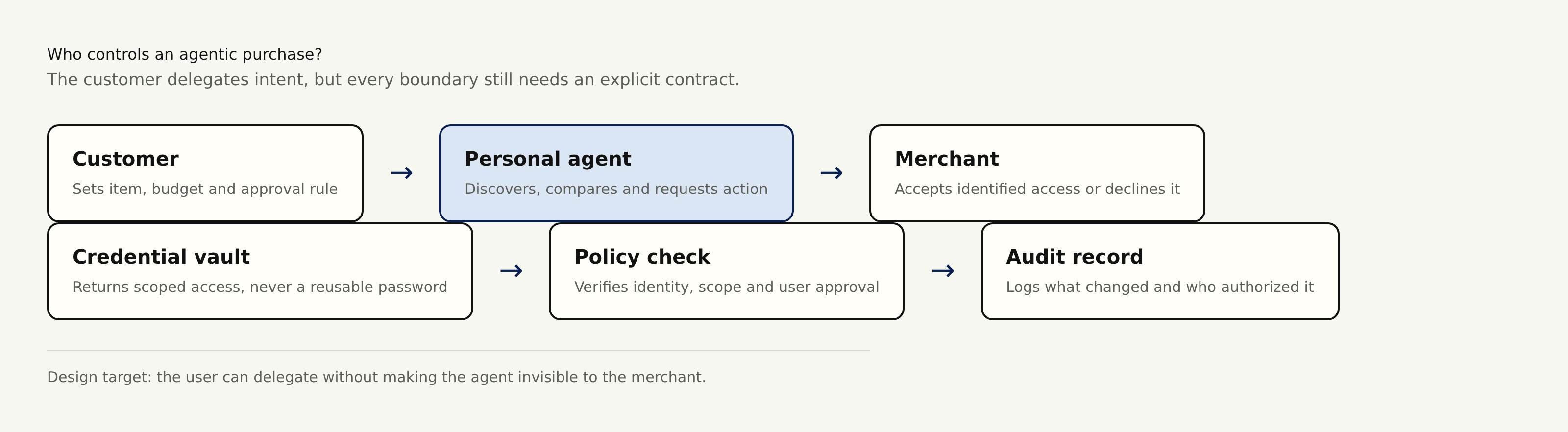
Browser automation cannot settle that tension. Merchants need an identity and permission layer they accept.
The $68 Billion Advertising Question
Amazon's annual report records $68.635 billion in 2025 advertising-services sales, up from $56.214 billion in 2024. Sponsored placement works because shoppers browse near purchase. If an agent returns one recommendation after comparing reviews and delivery dates, the shopper may never see the sponsored row.
Claims that Amazon's ad business will disappear are unsupported, but losing the recommendation step would weaken an influence point. Sellers may need better structured data, return terms, and delivered prices when agents select items.
One Reddit analysis suggested that WhatsApp distribution and background tasks could eventually bring personal agents to 100 million users. That is speculation, not adoption data. Meta says Muse works inside WhatsApp and continues tasks in the background; it has not announced 100 million Muse users.
Permission and Credential Trust Are the Real Bottleneck
A Reddit discussion focused on the combined access created when someone connects email, calendar, contacts, and payment. Meta says Muse stores credentials beyond the model's reach, uses a Sentinel agent for network decisions, asks before sensitive actions, and permits revocation. These are vendor claims, not an independent audit; Amazon says the behavior it observed looked undisclosed and unsafe.
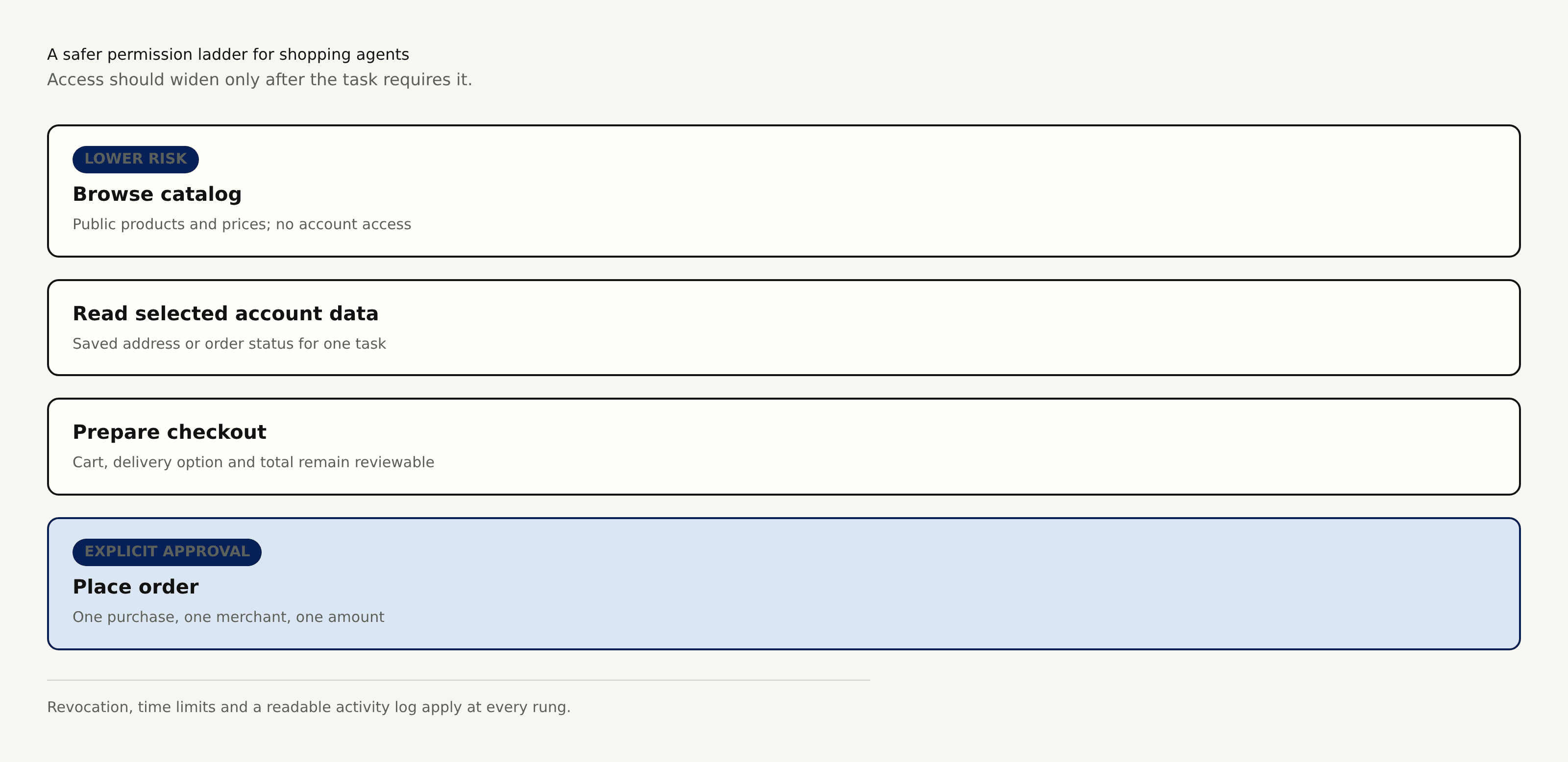
Authority should widen in stages: public browsing first, selected account data for a defined task, then a single-use payment credential after the total is visible. Keep a readable log and immediate revocation.
Our AI agent security risks guide covers wider failures. Zentor keeps workspace memory user-controlled and available to different AI through Zentor MCP, reducing pressure to share an unrestricted history. Its self-learning skills support recurring work without broad permissions. Amazon and Muse are not Zentor integrations.
Signals for Agent Builders and Deployers
An agent needs a declared identity, narrow scopes, and a way for the service to decline access. Merchants should publish approval rules, retention limits, and opt-outs. Anthropic's commerce blueprint assigns roles across customer, agents, merchant, and payment provider; our Anthropic Commerce Agents analysis examines it.
Test failure before convenience. Can an agent swap sellers after approval? What if the price changes? Who handles a return? Zentor's always-on model keeps work active, Smart Routing chooses a suitable model, and user-owned memory preserves context across AI surfaces. None replaces merchant consent or purchase approval.
Agentic Shopping Will Be a Negotiated Ecosystem
Courts are testing who accesses a site when an agent acts for a user. In August, the Ninth Circuit's Amazon v. Perplexity opinion vacated a preliminary injunction, reasoning that the user, aided by the agent, accessed Amazon's computers. The narrow ruling left contract claims open.
Negotiated access is likely: merchants expose approved capabilities, agents identify themselves and preserve approval evidence, and payment providers issue constrained credentials. Zentor applies the same principle by keeping context user-controlled and actions reviewable.
FAQ
Why did Amazon block Meta Muse?
Amazon says Muse lacked notice and identification and appeared to capture credentials. Meta says its secure VM isolates credentials, requires approval, and logs actions.
Does Amazon allow shopping agents?
Amazon runs Rufus and Buy for Me and has authorized outside commerce arrangements. Its objection concerns agents without an accepted agreement.
Could agentic shopping hurt Amazon advertising?
An outside agent could select products before shoppers see sponsored placements. No public evidence proves ad defense caused the Muse block.
What permissions should a shopping agent receive?
Start with public browsing, add task-specific access only when needed, keep checkout reviewable, require final approval, and provide immediate revocation.

Zentor Research Public data on the AI ecosystem
Zentor Research publishes quarterly data studies on the AI tools ecosystem, drawing on public registries (npm, GitHub, Hugging Face, arXiv, Google Trends). All charts and datasets ship under CC-BY 4.0.
Turn insights into action.
Zentor automates the recurring work your analysis points to. No engineering required.
References Amazon blocks Meta's Muse AI assistant · Introducing Muse · Muse product page · Amazon 2025 Annual Report · Amazon faces leader's dilemma over shopping agents · Meta lets Amazon users buy inside Facebook and Instagram · Analysis of push and agentic discovery · Amazon.com Services v. Perplexity AI · Reddit analysis of WhatsApp distribution · Reddit discussion of personal-agent permissions