ChatGPT Plus Token Limit: December 2026 Change

The ChatGPT Plus token limit is changing in December 2026. See what OpenAI confirms about shared Codex usage, Instant chat, reset times and unanswered quotas.
If you pay for ChatGPT Plus, the ChatGPT Plus token limit is set to change in December 2026: OpenAI says ChatGPT and Codex will draw from a shared allowance, measured in tokens. Instant chat will not draw from that usage, and OpenAI has not published the exact December start date or a per-plan token number in its transition notice.
Key Takeaways:
- OpenAI names Plus, Pro and Business in its December shared-allowance announcement.
- Model choice and task complexity affect usage; a fixed number of prompts is the wrong mental model.
- Instant chat does not draw from the announced usage allowance.
- Check Settings → Usage for your combined remaining usage and reset times. Don't guess your personal limit from somebody else's screenshot.
What changes to the ChatGPT usage limit in December?
OpenAI's usage-limit explanation says that, starting in December, the usage allowance for Plus, Pro and Business will be shared across ChatGPT and Codex as the agentic capabilities of Work enter the main ChatGPT experience. The page says ChatGPT and Codex usage will be measured in tokens, which it describes as units of information the model processes and generates. It doesn't announce a universal message cap.
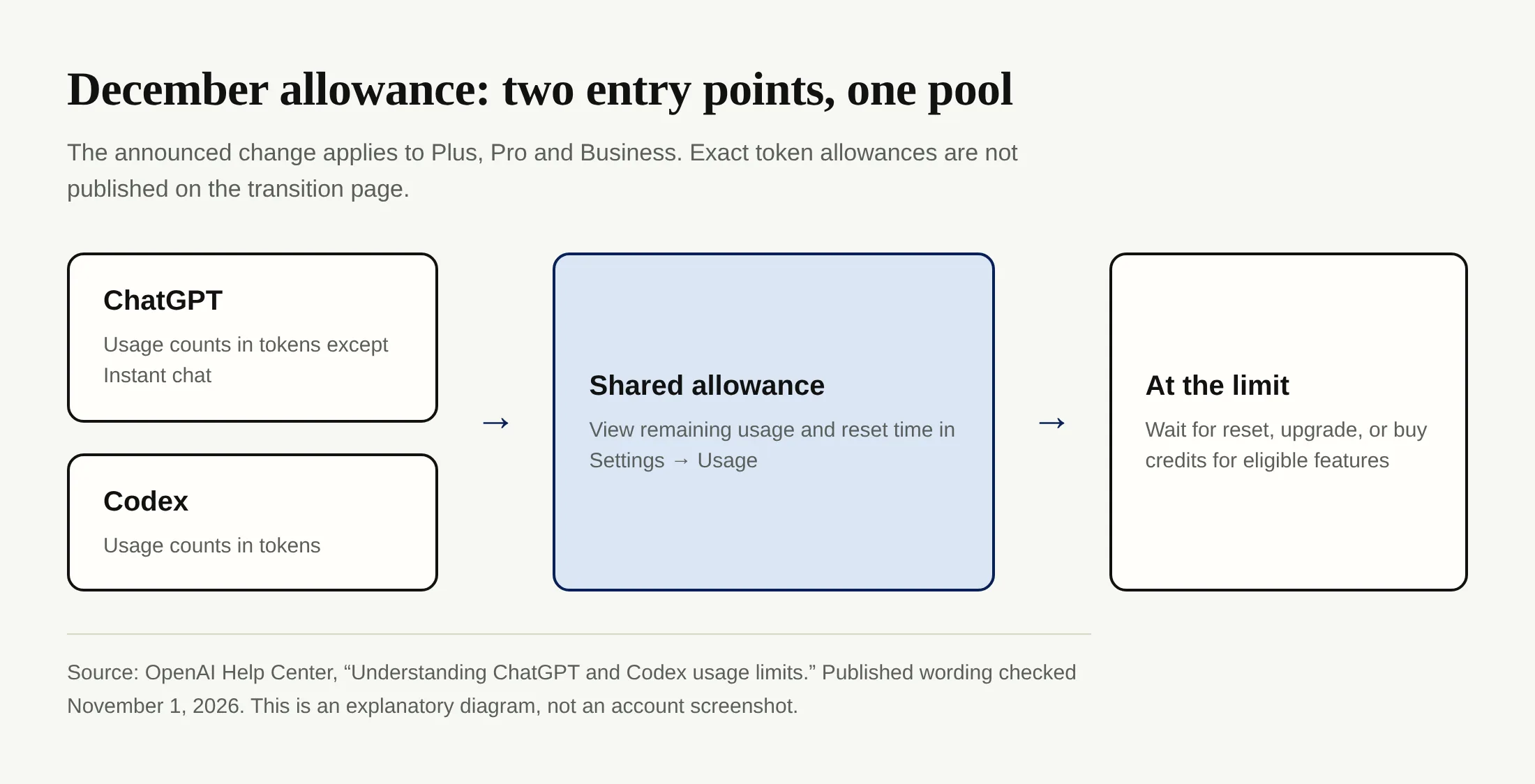
This matters even if you've never opened Codex. The new description joins the allowance for the named plans; it does not disclose how many ordinary chats your account can make. OpenAI expects most users won't need to wait for a reset more often than now, but that is not a guarantee.
Zentor solves a different problem: its workspace memory belongs to you and connects to AI through its MCP interface. That doesn't increase your ChatGPT allowance, but it can keep the context for a long-running assignment or client project outside a single chat thread.
Keep the work, not another long chat
Zentor keeps your workspace memory yours and delivers work into the tools you already use.
Get started →
Does ordinary ChatGPT chat count? What about Instant chat?
OpenAI's wording is unusually specific about the exception: “Instant chat will not draw from your usage.” Its preceding sentence says ChatGPT and Codex usage will be measured in tokens. Usage in the announced shared arrangement is token-based except for Instant chat. The page does not list every surface or its individual cost.
Suppose you're a student asking a quick definition before class, then asking a stronger model to read a long set of notes and draft an essay outline. The help page says more advanced models and complex tasks generally use more allowance. It does not specify the token difference between those two prompts. If you need a quick answer, see whether the Instant chat option meets the need; don't assume changing to an unlisted mode will preserve the same allowance.
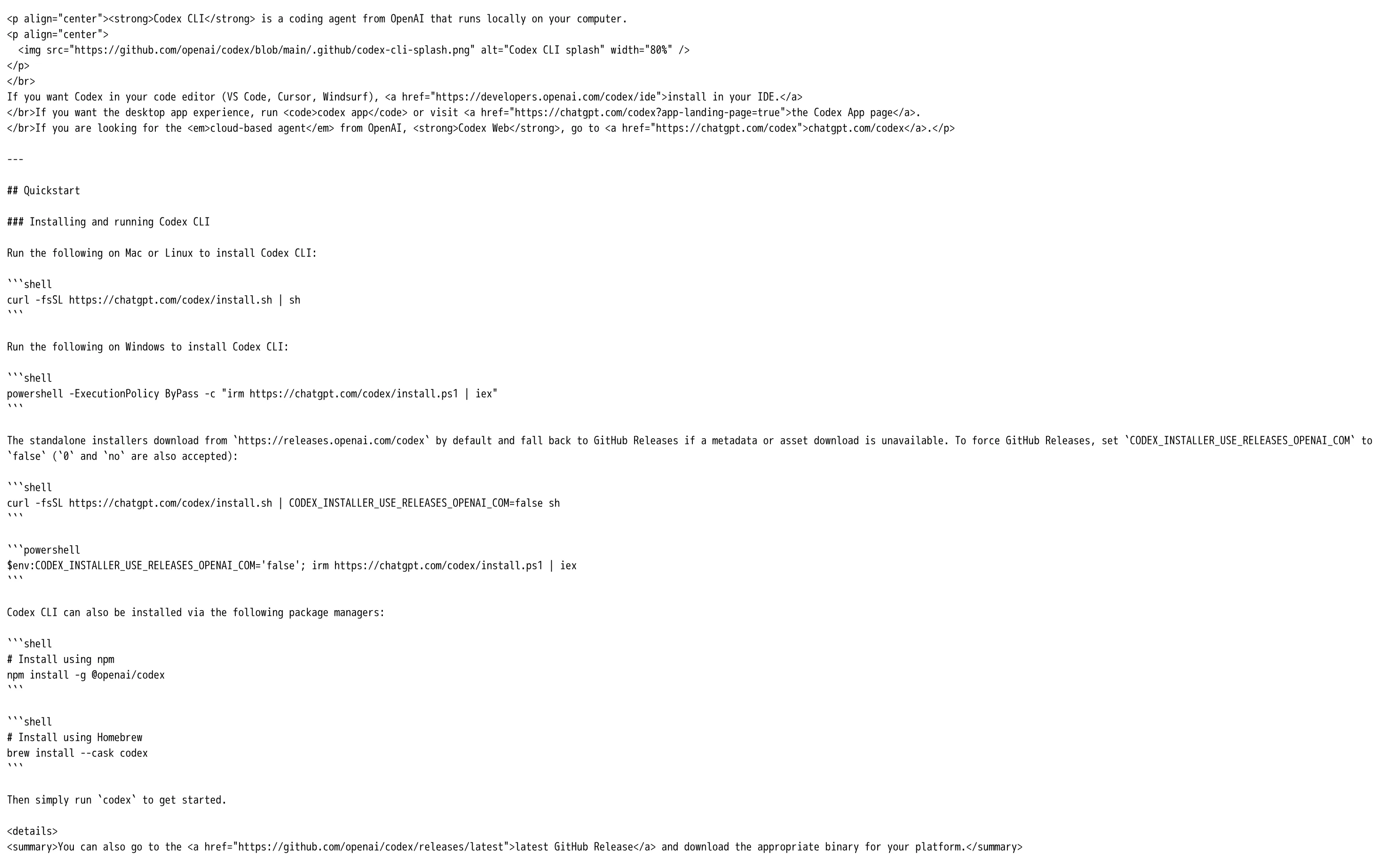
OpenAI's own Codex repository describes Codex CLI as a coding agent. The screenshot shows that description, not your account balance.
Which ChatGPT plans are named in the shared-usage announcement?
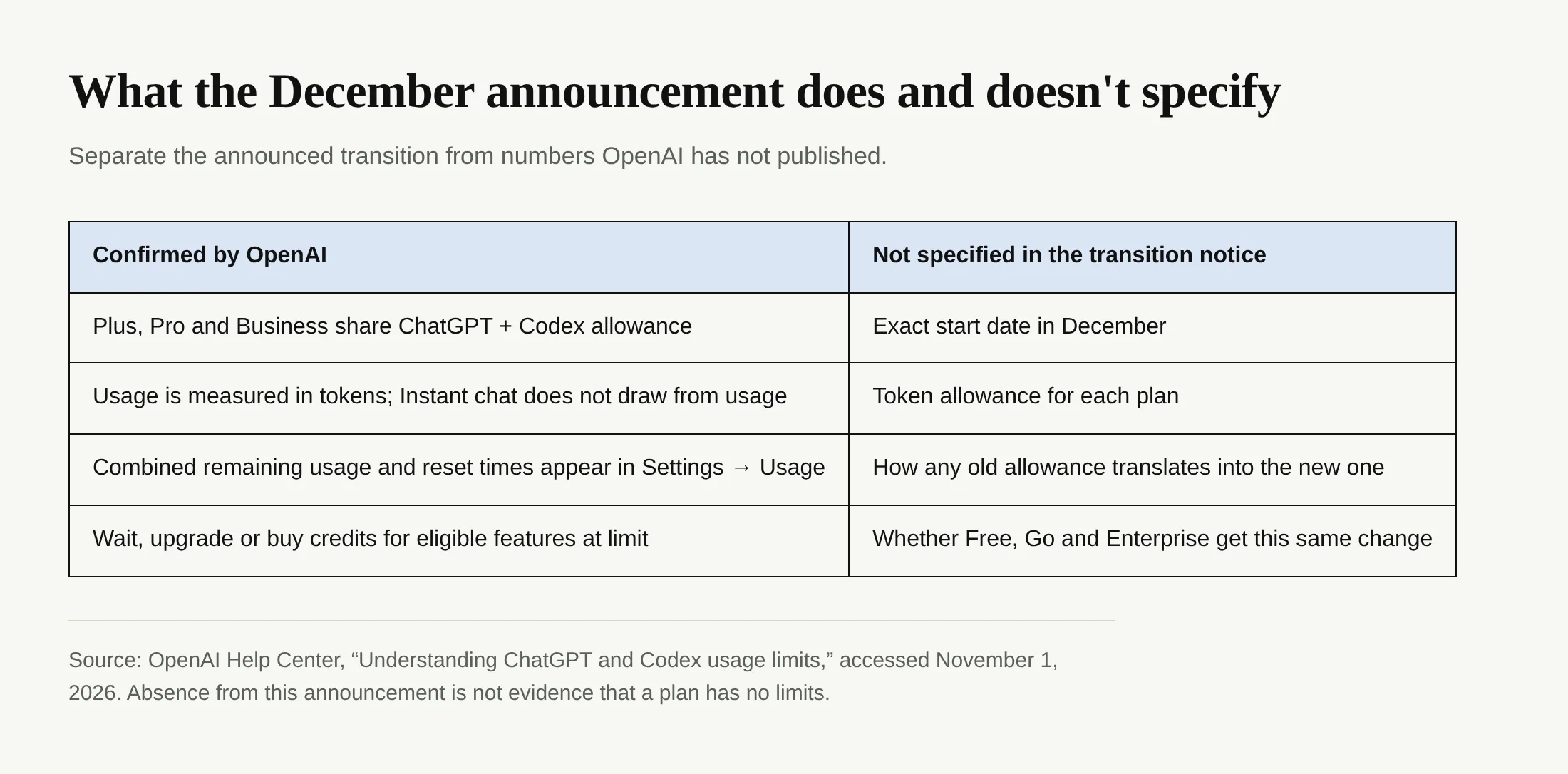
Plus, Pro and Business are named in the December transition notice. Free, Go and Enterprise aren't named there. Whether this same December ChatGPT-and-Codex change applies to those other plans is not announced in that notice. Silence does not make those plans unlimited or exempt from all other limits.
Separate help pages describe Codex usage by plan and existing Work and Codex allowances. Their numbers cannot be converted into a forecast for the new pool: OpenAI publishes no conversion formula.
ChatGPT Plus token limit reached? Check Settings → Usage
OpenAI says the combined remaining usage and reset times will appear under Settings → Usage. Check that screen when the new arrangement is active and identify which limit the interface says you've hit; a slow reply, an unavailable feature and an exhausted allowance aren't interchangeable diagnoses. The announcement itself doesn't promise that a response will get slower instead of showing a limit. Record the displayed reset time before deciding what can wait.
If you reach the announced limit, OpenAI lists three paths: wait for it to reset, upgrade your plan, or buy credits to continue using eligible features. “Eligible” does not promise that credits restore every feature. The separate Codex reset guide describes several kinds of reset under existing arrangements; don't mistake a saved or purchased reset there for a published conversion rule for the December change.
If you're a solo designer preparing a proposal for tomorrow, you can separate the deliverable from the conversation: save the approved client notes and outline in the tools where you keep your work, check the meter, and resume the expensive model task after the displayed reset if it can wait. Its self-adaptive workspace and self-learning skills are meant to keep your recurring workflow coherent; neither is a workaround for a ChatGPT account limit.
What OpenAI has not announced about the ChatGPT Plus token limit
As of November 1, 2026, the transition explanation leaves four practical questions unanswered: which day in December the change starts, how many tokens each named plan receives, how an older allowance converts to the new arrangement, and whether Free, Go or Enterprise get this same change. Those figures and decisions are not published in this announcement. A number attached to a screenshot of somebody else's Usage panel could describe a different plan, feature or period.
Nor does “measured in tokens” mean that you can divide a posted balance by a constant number of messages. OpenAI says the model and task affect consumption. Its Work and Codex usage guide likewise warns that existing allowances don't correspond to a fixed number of messages or tasks. That guide can help you understand why a long job differs from a short prompt, not supply the undisclosed December quotas.
A low-stress way to handle your Plus plan
Keep paying for Plus if it still fits the work you actually do, not because a headline made you fear an invented token ceiling. Try this for a week after the change becomes visible on your account: note the allowance and reset time in Settings → Usage, use Instant chat when it meets the need, and compare remaining usage after a simple question versus a heavier task. That is an observation, not a guaranteed saving.
For a creator publishing to several places, the expensive part isn't only generating a paragraph; it's reconstructing what you've already approved whenever you move tools. Zentor keeps workspace memory user-owned and portable through its MCP interface. Its Smart Routing selects a model for a task based on quality, speed and cost, but that is a workflow choice, not a way to raise OpenAI's own limit. If you want completed work delivered into the tools you already use, see Zentor's workspace and its pricing page; make a separate purchase decision from the ChatGPT meter.
FAQ: ChatGPT Plus usage limit and shared Codex allowance
Is ChatGPT Plus becoming unlimited for Instant chat?
OpenAI says Instant chat will not draw from the usage described in its December notice. It does not say Instant chat has no other restrictions. Check the official wording and your own account interface before assuming “unlimited.”
When exactly does the shared ChatGPT and Codex limit start?
OpenAI says “starting in December” but has not published a day in the transition notice as of November 1, 2026.
How many tokens do Plus users get?
The number isn't published in that notice. Usage also depends on the model and task, so any universal “prompts per day” conversion would be misleading.
What should I do if my remaining allowance shows zero?
Look at Settings → Usage and its reset time. According to OpenAI, you can wait, upgrade, or buy credits for eligible features. Follow the options shown for your account rather than assuming every option applies.

Zentor Editorial Zentor editorial team
The Zentor editorial team writes about workflow automation, AI agents, and the tools we build. Default byline for industry overviews, listicles, and collaborative pieces.
Ready to put this into practice?
Zentor runs browser tasks, research, and schedules automatically. Try it free.