DeepSeek Search API Starts Charging Nov 1

DeepSeek search api pricing changes November 1: see Search and Fetch request rates, affected Claude Code setups, billing exceptions, and ways to monitor costs.
DeepSeek's agent web search stops being free for certain DeepSeek API users on November 1, 2026, at 00:00 Beijing time. The official English pricing page lists $0.75 per 1,000 successful Search requests and the same price for Fetch; that is a new line item alongside model tokens, not a higher token rate. For deepseek search api pricing, check the agent's actual backend.
Key Takeaways:
- DeepSeek says server-side Search and Fetch calls made through DeepSeek Harness, Claude Code, or Codex while using its API are currently free; request billing begins November 1, Beijing time.
- The English page lists $0.75 per 1,000 successful requests for each tool. The Chinese edition lists 5 yuan for that unit, with no public explanation of which currency applies to which account.
- An empty search, failed call, or timeout does not incur a Search or Fetch request fee under the reported tool rules; model usage is a separate charge.
- Count successful searches and successful page fetches separately before projecting the bill. A five-requests-per-second cap is a speed limit, not a spending limit.
What's changing on November 1: Search and Fetch API pricing
DeepSeek's English pricing table treats Search and Fetch as standalone, per-request APIs. Search finds web results; Fetch takes a page and returns its content. One successful Search followed by one successful Fetch is two billable requests, not one. At the English rates, 1,000 successes of each cost $1.50 before model tokens; that is arithmetic, not a usage forecast.
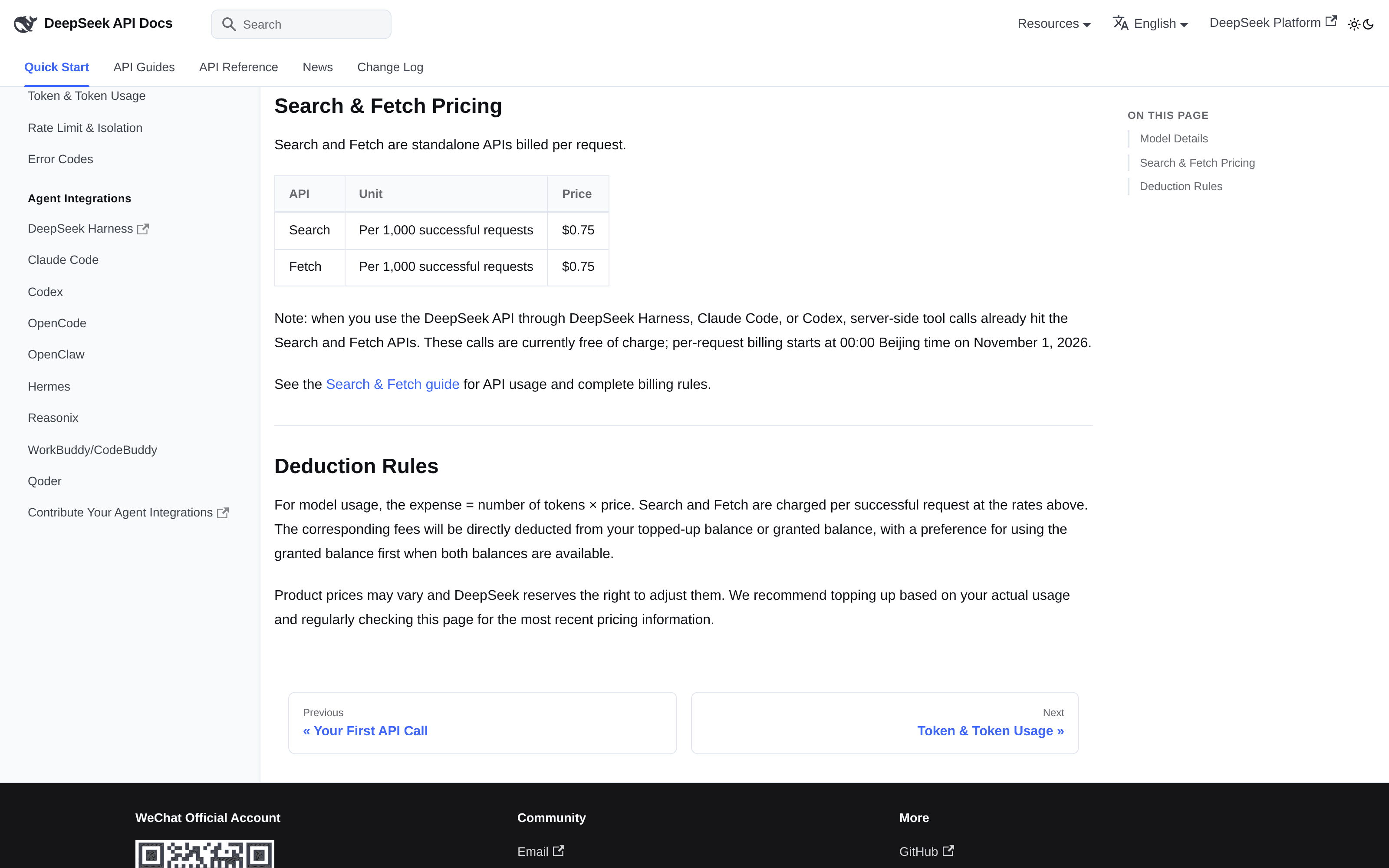
The Chinese pricing edition instead lists 5 yuan per 1,000 successes for each tool. AI Tamer's documentation review noted the language-edition difference. Don't convert the yuan figure into dollars and call it an exchange-rate correction: DeepSeek has not explained account-currency assignment on those pages. Check your billing currency before estimating spend; the English screenshot cannot establish your account rate.
See where the work and its costs go
Agent bills gain hidden line items. Zentor routes tasks across models for cost efficiency; inspect the work and budget for retries rather than assuming every extra call is free.
Get early access →
Why Claude Code and Codex users may suddenly see a bill
The distinction is whose API backs the agent. DeepSeek's pricing note names DeepSeek Harness, Claude Code, and Codex, but qualifies the statement: it applies when you use the DeepSeek API through those tools. It says server-side calls already hit its Search and Fetch APIs and currently carry no request fee. It does not claim every Claude Code or Codex user on another provider uses DeepSeek search. DeepSeek's Responses API documentation separately describes server-side web_search support, which helps explain how retrieval can happen without an obvious separate search action in your prompt.
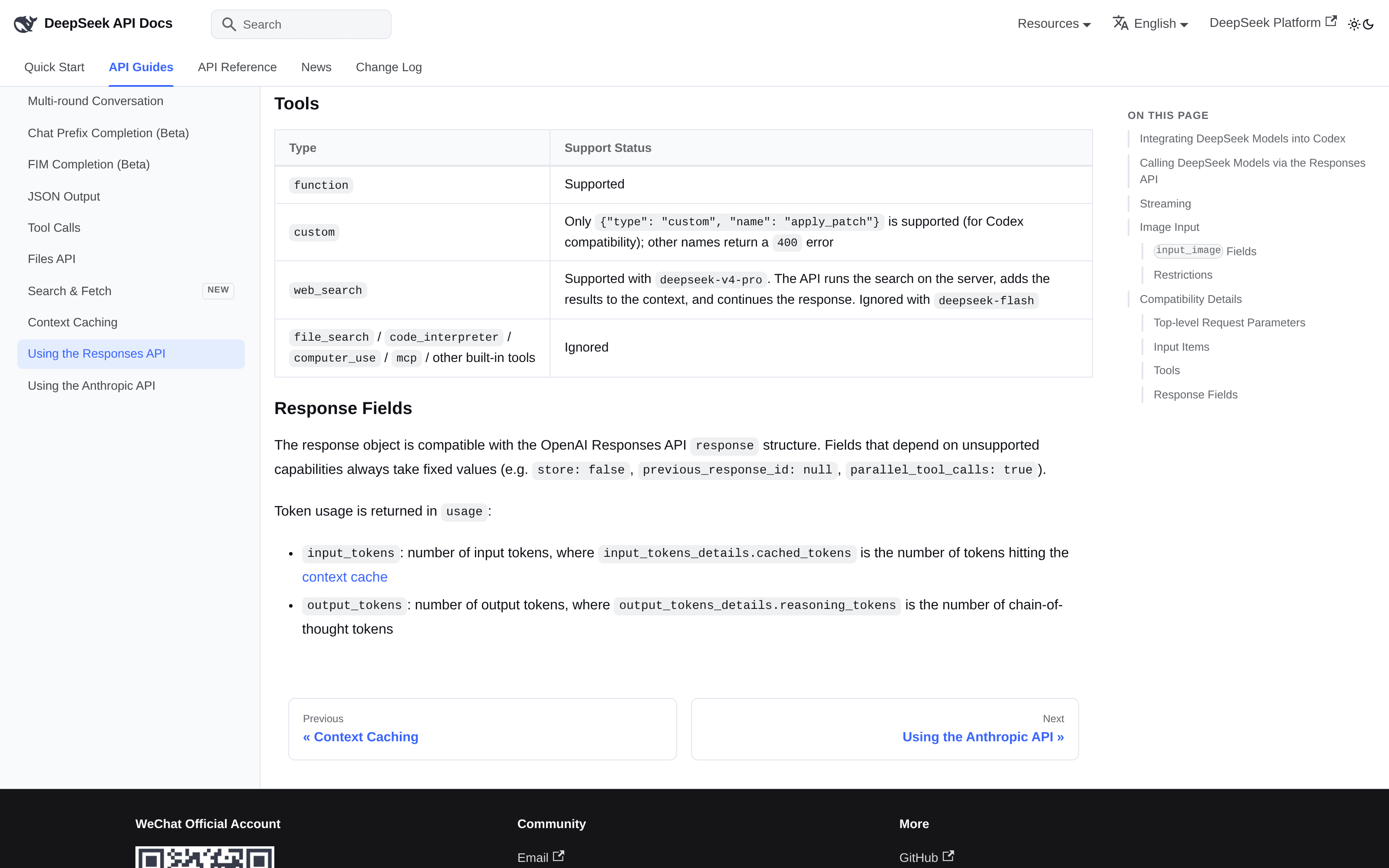
Ask an agent to check a current source and open a result. Your transcript reads like one task, yet the retrieval layer can perform Search and Fetch. Another citation can increase the tally without changing your token estimate. RECATOOLS' October 17 report first drew attention to this procurement problem. Measure calls, not prompts.
What doesn't get charged, and what the 5 QPS cap does not do
The reported Search and Fetch rules say failed requests, searches returning no results, and timeouts do not incur these retrieval request fees. A successful Search with results is billed once regardless of how many results you requested; a successful Fetch with page content is another request. None of that promises a failed overall agent task costs nothing. Model tokens and any other incurred usage remain separate.
The same documentation review and TokenPost's report describe separate per-account limits of five Search requests per second and five Fetch requests per second. This is a throughput ceiling. An agent running below it all day can still rack up successful requests; a throttled request may be retried later. Treat retry policy as part of the budget, not as proof of a charge or a waiver. Verify response categories against your own logs before labeling an attempt billable.
How to check whether your agent is quietly calling these tools
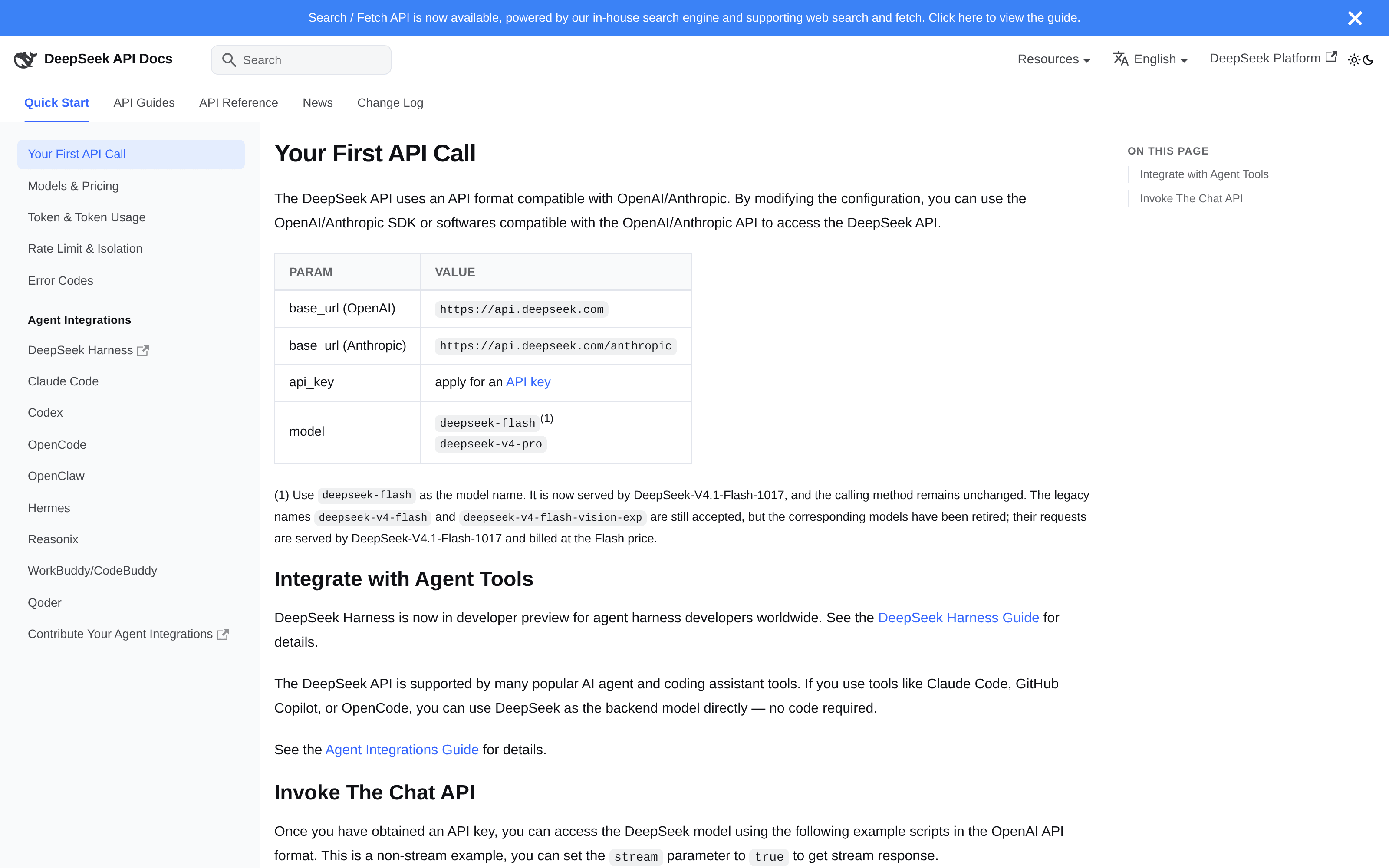
You don't need to guess from its final answer. First check the agent's provider configuration: if it does not use the DeepSeek API, this particular DeepSeek charge is not automatically yours. If it does, inspect whether web search or page fetching is enabled. The DeepSeek quick-start page documents its OpenAI- and Anthropic-compatible API base URLs and points to agent integrations, but that configuration alone does not prove a search happened.
Next, run a small, explicitly bounded task asking for a current webpage. Record the count of completed Search and Fetch calls, their outcomes, and the account or project that initiated them. Repeat with browsing disabled, if your setup permits, and compare usage. Some front ends hide intermediate tool events, so use provider usage records or application logs where available; don't claim zero calls merely because the chat view shows none. For a spending estimate in dollars, multiply successful Search plus successful Fetch requests by 0.75/1,000, then add model usage. This is an estimate at the English rate; the invoice and your applicable currency decide the actual charge.
The free-tier sunset changes agent web search cost planning
The deepseek search api pricing change is narrow: a previously free server-side request fee now has a dated waiver end for specified integrations. DeepSeek's pricing notice is unusually useful because it names the affected tools and the time boundary. The work still needs an owner who can answer how many searches and fetches a normal task requires.
For a one-person business asking an assistant to research suppliers, this is the moment to separate the cost of thinking from the cost of opening sources. Zentor's workspace approach keeps work organized across the tools you already use, while its smart routing selects a model for a task with cost in mind. That is not a promise that DeepSeek's retrieval fee disappears inside Zentor, or that an interrupted run incurs no usage. Keep the service's own billing records alongside your workflow budget.
FAQ
Who is affected by DeepSeek Search and Fetch billing?
DeepSeek API users who call Search or Fetch directly, and users of DeepSeek Harness, Claude Code, or Codex configured to use the DeepSeek API when those server-side tools run. A Claude Code or Codex account using a different backend is not, solely by virtue of its product name, a DeepSeek Search customer.
When exactly does billing start, and in which time zone?
For the currently free server-side calls named on DeepSeek's English page, the stated switch is November 1, 2026, 00:00 Beijing time, which is October 31 at 16:00 UTC. The listed standalone price does not by itself establish that every direct API call before then has a waiver; check your account's terms.
How can I cap spend?
Set a task-level search/fetch budget in your agent if it supports one, disable browsing when current information is unnecessary, and monitor provider usage and balance. The five-QPS limits cap call rate, not a monthly bill. If your provider offers alerts or hard spending controls, verify their behavior in that account rather than assuming they are enabled.

Zentor Research Public data on the AI ecosystem
Zentor Research publishes quarterly data studies on the AI tools ecosystem, drawing on public registries (npm, GitHub, Hugging Face, arXiv, Google Trends). All charts and datasets ship under CC-BY 4.0.
Turn insights into action.
Zentor automates the recurring work your analysis points to. No engineering required.