Amazon Bee Frontier & Bee Eclipse: What the Personal AI Wearables Do
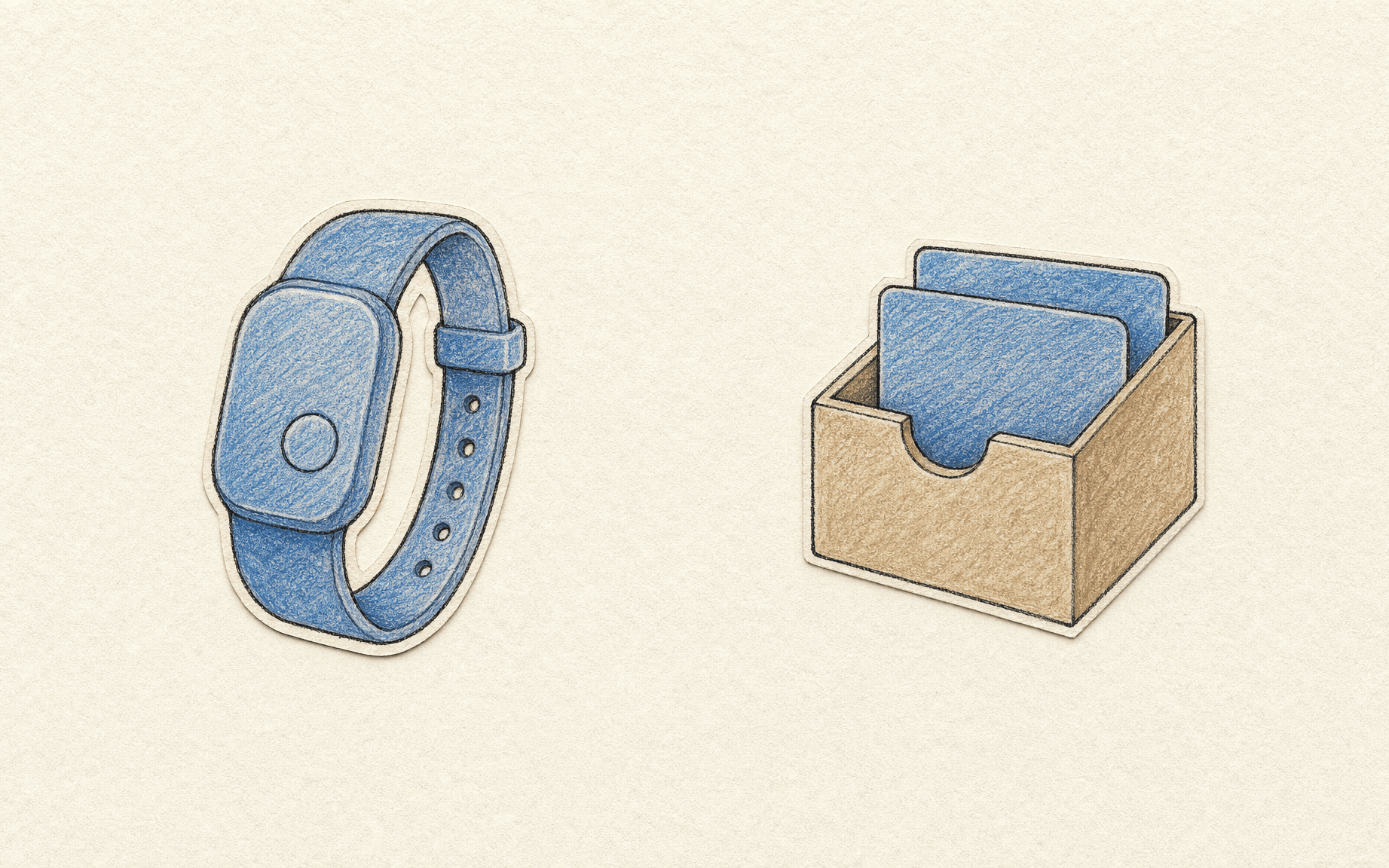
Amazon Bee Frontier and Bee Eclipse compared: October 2026 prices, battery claims, Bee Pro costs, and the privacy checks to make before you record.
Amazon Bee Frontier and Bee Eclipse are two conversation-capture devices, not general-purpose agents: Frontier goes on your wrist or clothing, while Eclipse attaches to your phone. As of October 16, 2026, Amazon lists Frontier at $74.99 and Eclipse from $99.99, but only Frontier is available now. The buying question is less about which one has smarter AI than whether you want a microphone present for the conversations you choose to capture.
Mateo· built by the Zentor team
Need help with the follow-up, not a recording?
Mateo checks your inbox and calendar, finds the trial, the refund and the form you forgot, and handles them. Works in any browser, anywhere.
Ask Mateo →
Free in early access
Key Takeaways:
- Frontier is a wristband or clip-on; Eclipse is a magnetic phone attachment, not a second wristband.
- Amazon quotes up to seven days for Frontier and more than 21 days for Eclipse. These are company estimates, not our battery tests.
- The free tier includes 14 days of memory according to CBS; Bee Pro costs $11.99 a month and adds features including Alexa+ and Amazon.com connections.
- Amazon's audio-deletion and transcript-encryption statements are vendor claims. Check recording consent, retention and sharing before using either device around other people.
What are Bee Frontier and Bee Eclipse?
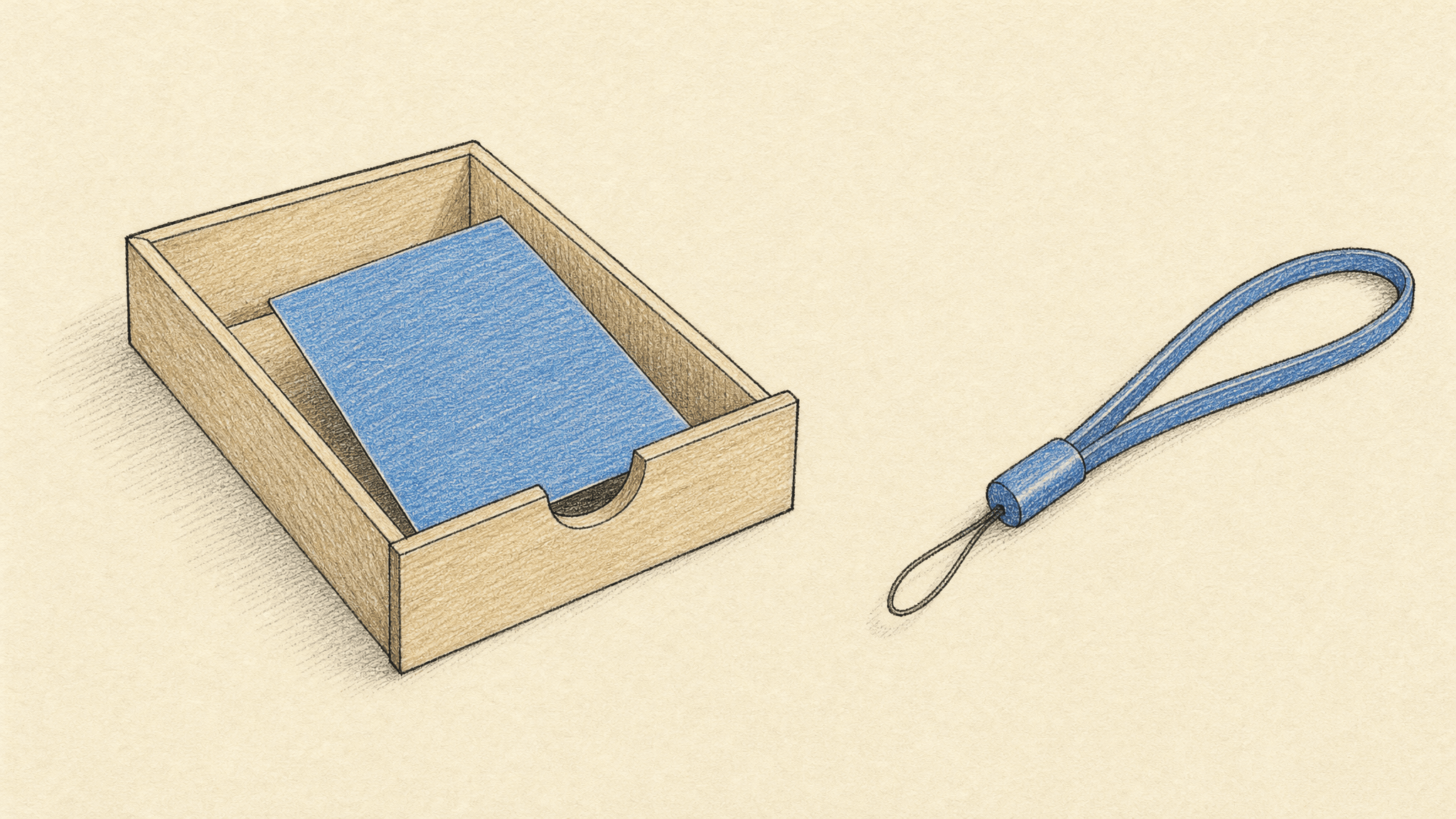
Amazon's launch announcement describes Frontier as a wrist-worn or clip-on device with two microphones, a button, an indicator light, USB-C charging and an IP67 rating. Eclipse is about the size of a credit card, sticks magnetically to the back of a phone and has its own button and indicator. Both are intended to make summaries and action items from conversations you elect to capture. This is a product explainer, not a hands-on Amazon Bee review; we have not tested microphone accuracy or the hardware.
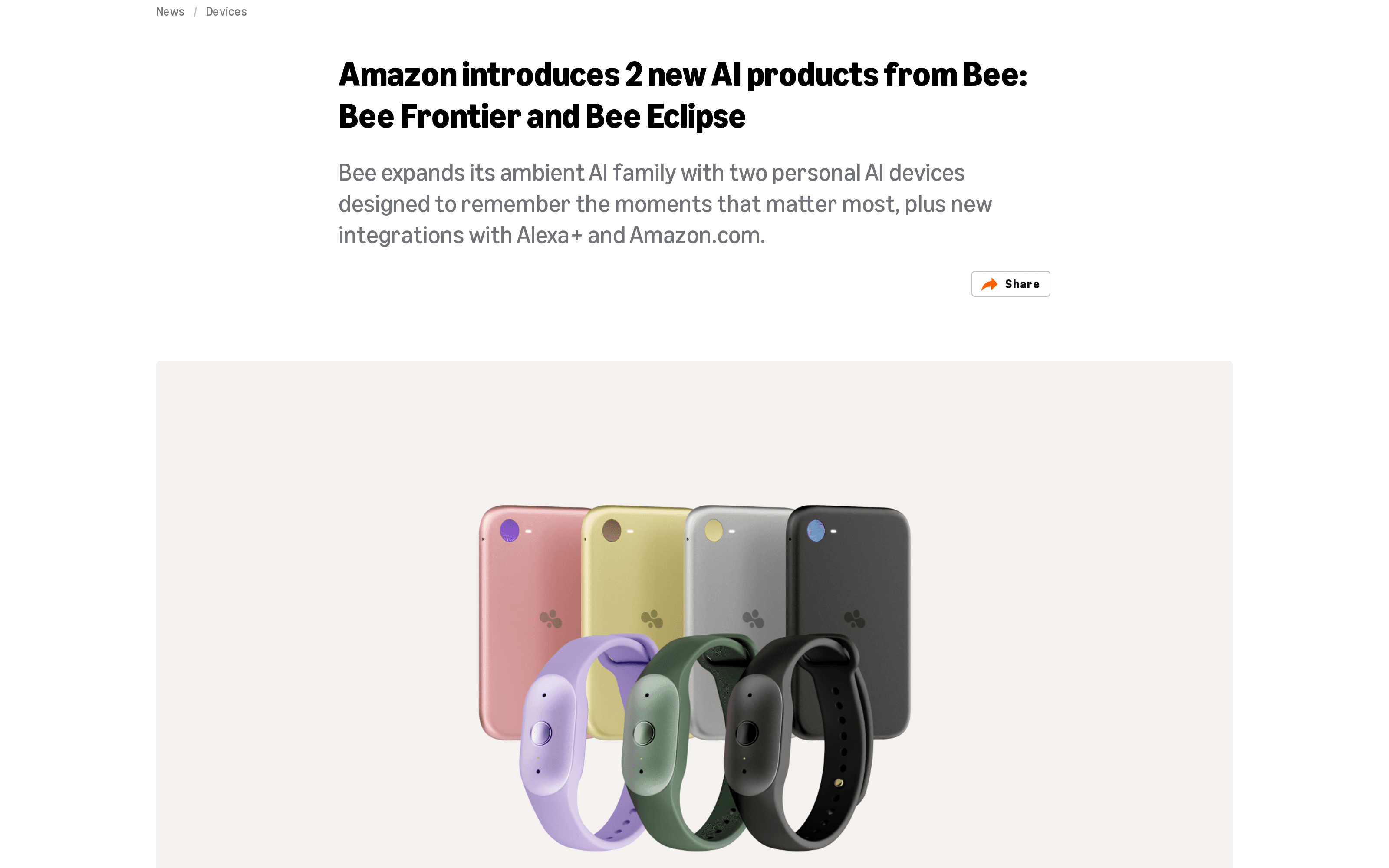
Price, battery and the free tier versus Bee Pro
| Buying question | Bee Frontier | Bee Eclipse |
|---|---|---|
| Announced US price | $74.99 | Starts at $99.99 |
| Availability on October 16, 2026 | Available | Coming soon; no date given |
| Claimed battery life | Up to seven days | More than 21 days |
| Placement | Wristband or clothing clip | Magnetic phone back |
For the service, CBS reports free conversation summaries, recaps and 14 days of memory. Bee Pro is $11.99 per month, with suggested to-dos and Alexa+/Amazon.com integration among its extras. Engadget's launch coverage also describes unlimited recent summaries, daily memories and a desktop app for Pro. If you plan to rely on older conversations or connected shopping, budget for the ongoing plan rather than the hardware alone; confirm the current entitlements in Bee's checkout before paying.
How Bee captures and summarizes your day
For Amazon Bee Frontier and Eclipse, Amazon says you press the device button to turn capture on or off and an LED signals activity. Once enabled, Bee turns speech into transcripts, summaries and possible next steps; its app can display conversation recaps. Amazon says it can use selected connected apps such as Gmail, Google Calendar and Microsoft Outlook to draft a follow-up or a calendar invite. A suggested invite is not the same as a confirmed appointment, so check names, dates and consent before acting on one.

For a student, the useful test isn't whether a lecture yields an elegant paragraph. It's whether the transcript correctly identifies an assignment deadline and whether recording is permitted in that classroom. CNBC's launch report says the devices record when turned on; don't translate the casual phrase “always listening” into a claim that the microphone records continuously while switched off.
Privacy: Amazon's claims and the checks you still need
Amazon says Bee processes audio in real time and discards it rather than storing an audio file. It also says transcripts and derived material are encrypted with device-controlled keys, processed inside Bee Private Compute and deletable by users. Its separate explanation of Private Compute describes trusted-server verification before data is shared with its processing environment. These are Amazon's descriptions, not a security audit we performed; the existence of a product indicator light does not prove when data is deleted or who can access every derived item.
Before a meeting, look for the light, tell everyone what is being captured and get the required permission. Amazon says its devices prompt users to seek permission from call participants when a recording starts; laws and venue rules may demand more. Try deleting a test transcript and summary, check whether an export or shared copy survives, and inspect which app connections are active. Ask how long derived memories persist beyond the free tier, what a connected service receives, and whether you can revoke it without losing the notes you meant to keep. These are buying checks, not statements that Bee has failed them.
A wearable recorder and a task-based workspace solve different problems
Amazon Bee Frontier begins with speech in the room. Zentor instead focuses on workspace memory that belongs to the user and can reach different AI tools through Zentor MCP; it isn't a wearable recorder and we know of no Bee integration. If your shop needs a note of what a supplier said aloud, Bee's proposed capture workflow addresses that. If you already have the facts in work apps and need an output delivered there, Zentor's self-adaptive workspace is aimed at that different job. Neither product removes the need to check a consequential action.
The awkward handoff often comes later: a conversation mentions a refund, but the actual deadline sits in email and the revised appointment lives on your calendar. That's the natural point for Mateo, built by the Zentor team: its stated early-access focus is checking inbox and calendar life admin, including forgotten trials, refunds and forms. It does not turn Bee recordings into tasks, and you shouldn't imply the services connect. For more on permission and memory rather than hardware, see our personal AI agents guide. Zentor's always-on workspace is a separate way to keep an assigned work task available while your laptop is off, not a reason to record a conversation without consent.
Keep work context in your workspace, not on a wrist
Explore Zentor's workspace memory and task tools. Bee is a separate product; there is no integration claimed here.
Get early access →
FAQ
Does Amazon hear my conversations through Bee?
Amazon says audio is processed and deleted in real time, while transcripts and insights stay encrypted under device-controlled keys, so it says even Amazon cannot access your private content by default. We have not independently tested those claims. With capture on, your speech still needs processing; read the current privacy terms and consider everyone else in the conversation.
What does Bee Pro add?
As reported at launch, it costs $11.99 per month and adds features such as longer-reaching or unlimited recent summaries, suggested to-dos and connections to Alexa+ and Amazon.com. CBS reports 14 days of memory on the free tier; check Bee's current plan screen for precise limits before buying.
Does Bee need Alexa?
No Alexa+ connection is required for the basic conversation-summary use described by Amazon. Alexa+ is an optional connection for asking an Alexa device about Bee summaries and to-dos, and the company describes it as part of the expanded experience. Keep that connection off if you don't want Bee-derived information surfaced through Alexa.

Zentor Editorial Zentor editorial team
The Zentor editorial team writes about workflow automation, AI agents, and the tools we build. Default byline for industry overviews, listicles, and collaborative pieces.
Ready to put this into practice?
Zentor runs browser tasks, research, and schedules automatically. Try it free.