Long-Horizon AI Agents: The Oct 2026 Shift to Background Execution
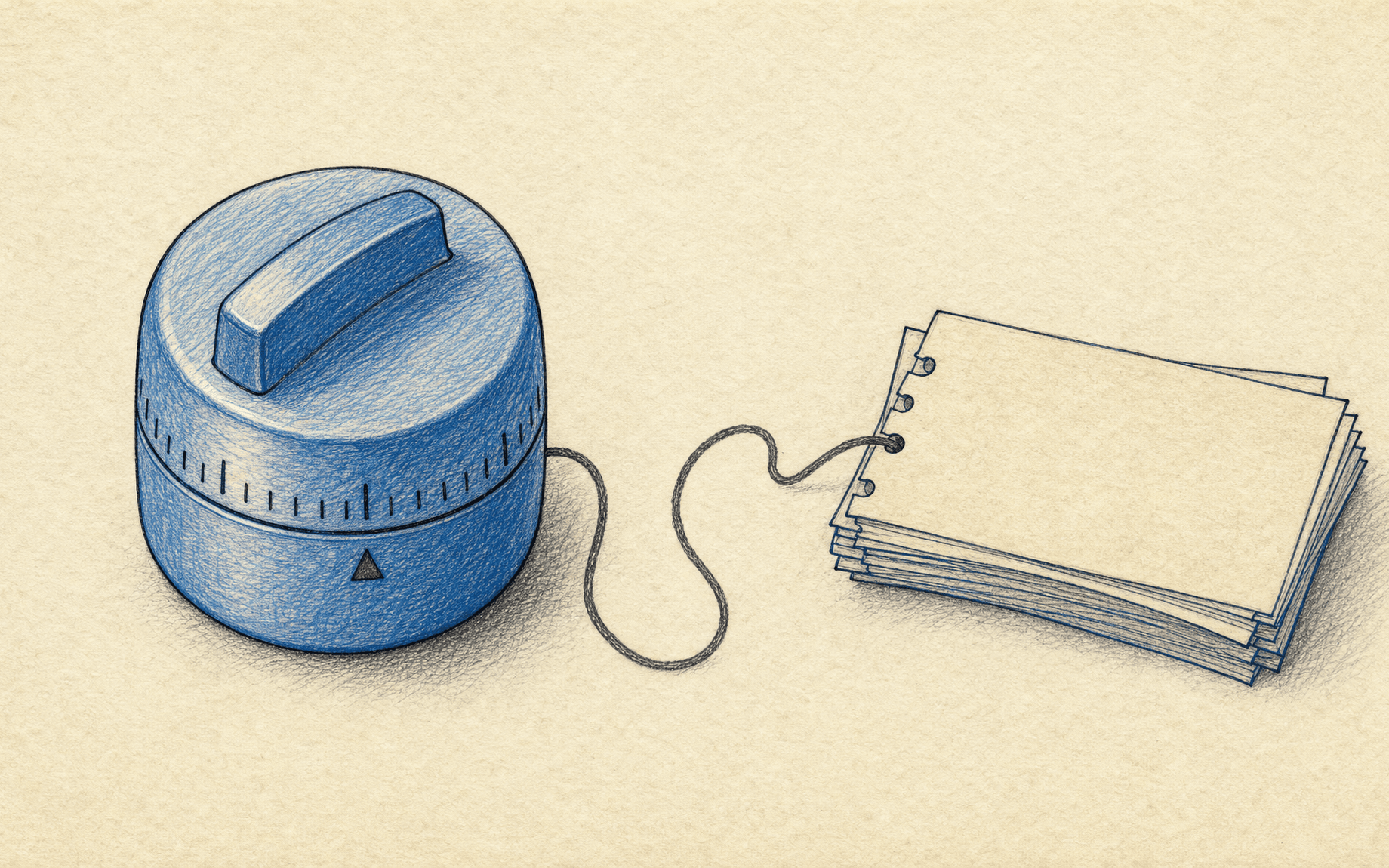
Long-horizon agents can pause, resume and work while you are away. What October 2026 announcements actually say, and the permission checks that matter.
Long-horizon agents are AI systems meant to carry a job past the end of a chat: keep the task state, wait for a document or decision, then pick up again. In October 2026, Google and Cresta put that idea in front of very different customers. The significant shift is not that a model can think for longer. It is that someone must own the unfinished work, the connected accounts and the decision to act while the user is away.
Mateo· built by the Zentor team
An unfinished errand should not vanish with the chat
Mateo checks your inbox and calendar, finds the trial, the refund and the form you forgot, and handles them. Works in any browser, anywhere.
Ask Mateo →
Free in early access
Key Takeaways
- Long-horizon agents need saved progress and a way to resume after a real-world wait, not merely a long context window.
- Google's app announcement and Cresta's service-work announcement came on October 13; Meta's model post was October 12, while Mistral's workflow preview dates to April.
- Persistent work raises a separate question: which actions are allowed while nobody is watching?
What counts as a long-horizon agent?
A chat assistant can draft a refund request in one sitting. A fixed automation can copy every new form response into a spreadsheet. Long-horizon agents have a broader assignment: collect the missing receipt, recognize that the response has not arrived, keep track of what has already happened and continue only when it can make the next legitimate move. It may be idle most of the time. That idle time is part of the job, not a failed run.
If a tool forgets which evidence it requested or emails a customer twice after a restart, its intelligence will not help. Zentor's always-on workspace keeps work available when your laptop is off; it does not guarantee every third-party approval or recovery path. Its workspace-memory approach keeps context separate from the right to change an external account.

What actually changed in October 2026?
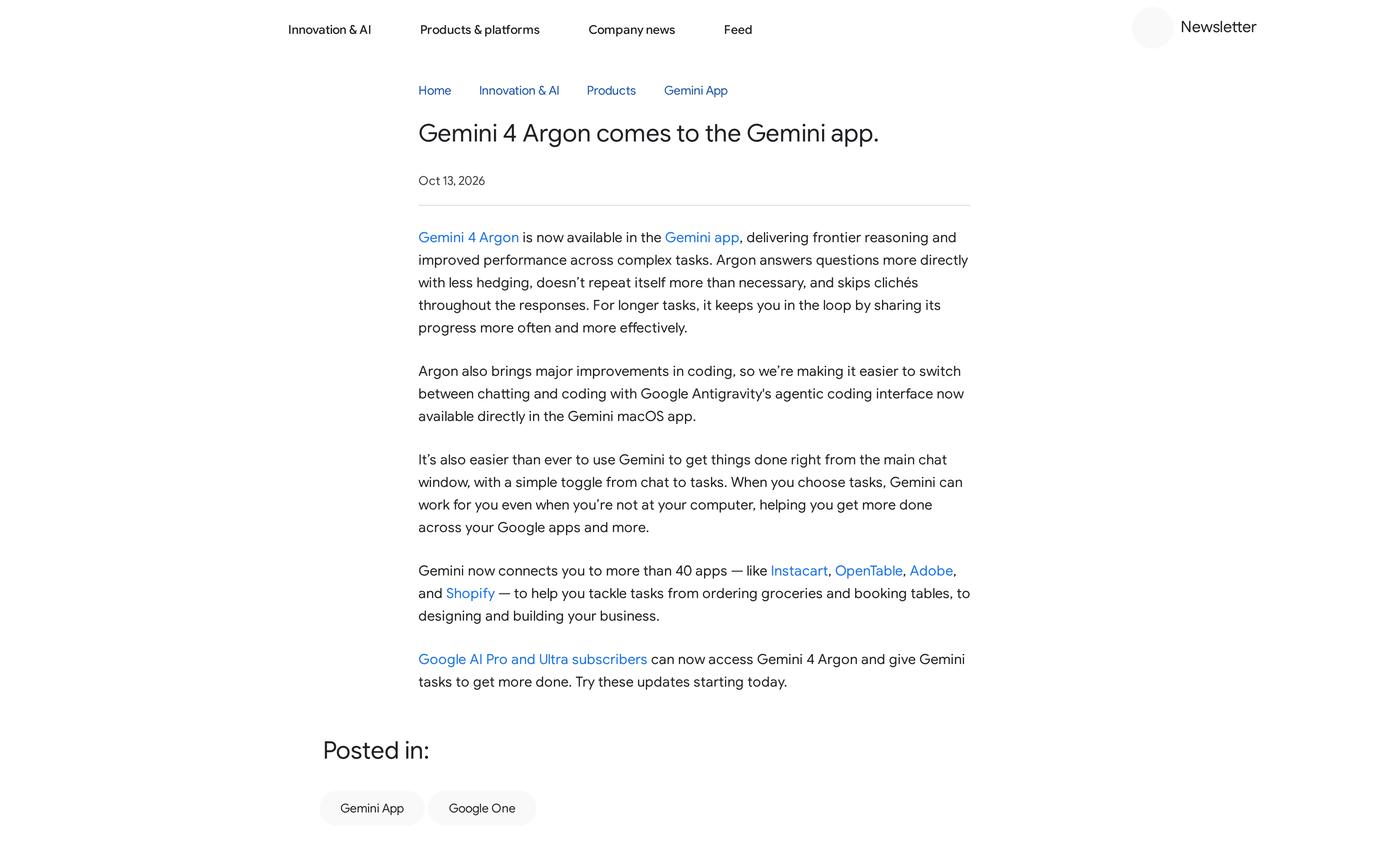
On October 13, Google introduced Gemini 4 Argon for complex scientific, coding and agentic problems, describing a one-million-token unified input-output limit in its API. That is a model and API capability, not proof of uninterrupted, reliable execution for weeks. Its separate Gemini app announcement describes a tasks mode that can work while the user is away from the computer and connections to more than 40 apps. Google says access to the new app features starts with its AI Pro and Ultra subscribers; availability should not be generalized to every account.
Also on October 13, Cresta announced Deputy Agent. Cresta describes refund requests, transaction disputes and insurance claim appeals that take days or weeks across people and systems. According to its own release, Deputy saves progress when a document, response or approval is missing, resumes when that input arrives, and records actions and approvals for review. Those are product claims from Cresta, not independent completion-rate measurements.
The apparent launch cluster needs a correction. Meta's Muse Wonder post is dated October 12, not October 13. It describes Active Memory across conversations and Active Focus on difficult work, including checking in before important actions. The models are available through the channels Meta names, but the post says Muse Wonder will soon power Muse experiences. This is not evidence that a new consumer Muse agent launched that week. Mistral's Workflows preview is older still, dated April 27. It belongs in the story as an earlier example of the execution layer, not a simultaneous October release.
These different announcements show a shared problem, not a measured adoption surge.
Who keeps the work alive when you close the laptop?
For long-horizon agents, ask where the task lives, what wakes it, and whether it shows which step finished. A service may receive an event or check on a schedule. Neither approach guarantees recovery after a broken connection or permission to send an unreviewed message.
A social-media aggregator circulated a discussion about keeping Claude workflows responsive after a laptop is switched off. We could not independently locate and verify the original Reddit post, so it would be misleading to present its claimed options or engagement as a demand survey. The public product announcements above are stronger evidence of supply than of how many people actually use background AI agents. If you are evaluating a service, ask for a real interrupted-run demonstration rather than a 24/7 label.
For a student waiting for a revised assignment brief, a sensible first task is collecting the update and drafting a checklist, not silently submitting work. Zentor's self-adaptive workspace can help organize that continuing work in one place, but the permission to read the notice and the permission to submit are different decisions. This is why personal agents and their safety deserve a separate look from model benchmarks.
The difficult part is state, not just context
Mistral says Workflows tracks state at each step, resumes after failures and records branches, retries and changes in Studio. Its announcement identifies Temporal as the underlying durable-execution engine and gives an example of a workflow waiting for a human decision before continuing. Those are documented vendor descriptions, not a guarantee that every integration will behave correctly. Cresta's equivalent claim is more concrete to a support team: a missing document creates a pause, not a request to start the whole claim again.
Long-horizon agents need a case file: the current stage, completed actions, the next decision's owner and evidence an external action already happened. A million tokens cannot replace an authoritative receipt that a refund was issued. Otherwise a retry might create a second customer message.

Permissions for work that happens while you are away
Persistent access has a cost when a task misunderstands a source. OWASP's excessive-agency guidance recommends minimizing tool permissions, enforcing authorization in downstream systems and seeking human approval for high-impact actions. For a small shop, that translates into separate questions: may the agent read a customer thread, prepare a reply, send it, or issue a refund? A prompt saying “do not send” is not the same thing as a technical denial of Send permission.
For long-horizon agents, require action-level approval for transfers, deletions, outbound promises and posts; log the source, approval and actual change. Ask what happens if approval expires or a connection breaks midway. These are evaluation criteria for any vendor, not a list of security features we claim Zentor has shipped. Zentor's portable workspace memory, exposed to compatible AI through Zentor MCP, can reduce repeated setup across tools; portability of memory does not confer permission to write through those tools. Keep the two decisions apart.
The consumer version of this problem might be a trial that expires while you're busy or a refund form buried in mail. Mateo, built by the Zentor team, addresses inbox and calendar life admin rather than promising to resolve every long-running business process. That specific job is a more honest pivot from the enterprise examples than claiming one agent can administer every account. Wherever the agent runs, begin with a reviewable draft and ask what approval the real action requires.
Keep a recurring task in one workspace
Let Zentor organize the context and deliver reviewable work into the tools you use. Check connected-app permissions before allowing an external action.
Get early access →
FAQ
What is a long-horizon agent?
It is an agent intended to pursue a goal across multiple steps and waits, preserving progress so it can continue when new information or an authorized decision arrives. “Long-horizon” says what kind of work it attempts, not how often it succeeds.
How is a long-running agent different from workflow automation?
A fixed workflow follows defined branches. An agent may interpret new information and choose among authorized next steps. Both need durable records and clear approval points when a task touches real accounts.
Can an AI agent work 24/7 without my laptop?
A hosted, always-on workspace can stay available while your computer is off. Actual triggers, access levels, recovery behavior and applicable service terms depend on the product. Ask to see the status of a paused task before trusting a time-sensitive one.
Are always-on agents safe with account access?
Not by default. Limit each connection to the smallest useful read or write scope, require approval for consequential actions, and inspect the record of what ran. If a provider cannot show a meaningful approval boundary, start with a read-only task.
Zentor Research Public data on the AI ecosystem
Zentor Research publishes quarterly data studies on the AI tools ecosystem, drawing on public registries (npm, GitHub, Hugging Face, arXiv, Google Trends). All charts and datasets ship under CC-BY 4.0.
Turn insights into action.
Zentor automates the recurring work your analysis points to. No engineering required.