Meta Muse Spark Open: An Open-Weight Agent Model You Can Run on a Desktop
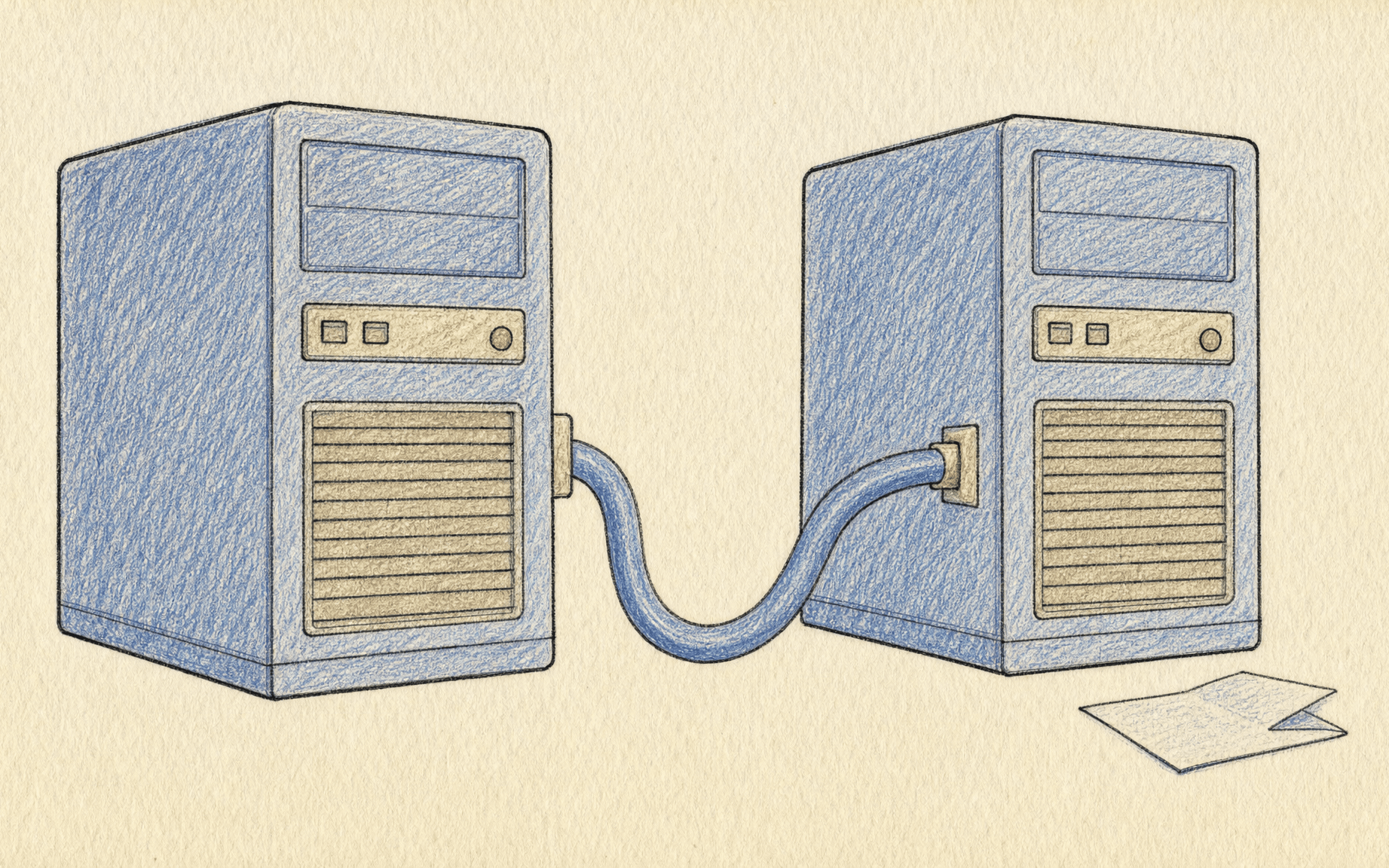
Muse Spark Open runs on two M5 Ultra Mac Studios, but local deployment needs huge memory. See quantized options, API access, and license limits.
Meta released Muse Spark Open's weights on October 15, 2026, and says the model can run locally on two Apple M5 Ultra Mac Studios. That desktop claim needs its second half: the pair offers up to a terabyte of unified memory, not the hardware in an ordinary laptop. Meta's announcement puts the model at 816 billion total parameters and 42 billion active per token.
Key Takeaways:
- Muse Spark Open is an open-weight, multimodal model built mainly for coding and long agent tasks, not the Meta Muse consumer app.
- Meta's desktop demonstration uses two M5 Ultra Mac Studios and MLX; a single everyday Mac isn't the advertised setup.
- Smaller quantized files change the memory equation, but they don't turn the full model into a routine laptop download.
- Hosted APIs are the simpler route if you want access rather than ownership of the weights.
What Meta's Open Weights Actually Include
The 816B/42B split describes a mixture-of-experts model. Hugging Face's technical walkthrough says each expert layer holds 256 experts and routes each token through eight. Only a fraction computes for a token, yet all the expert weights still need somewhere to live. Active size doesn't determine memory requirements.
The model takes text, images, audio and video as input and produces text. Its advertised context reaches one million tokens, shared across those modalities; that limit isn't a promise that filling it will be cheap or fast. Meta tuned it for coding and long tasks.
For Zentor readers, weights and a finished assistant are different things. Our explainer of Meta Muse covers the separate consumer product; obtaining these weights doesn't recreate its accounts, approvals or connected services.
Need the work done, not a model cluster?
Zentor keeps your workspace memory usable across AI tools while the task happens in the tools you already use.
Get early access →
Can You Really Run It on a Mac?
Yes, in Meta's specific setup: two M5 Ultra Mac Studios with MLX. Meta says each can provide up to 512 GB of unified memory, giving the pair about one terabyte. The full BF16 checkpoint alone occupies roughly 1.5 TB, per Hugging Face. Quantization and a compatible runtime are central to making the desktop demonstration plausible; neither follows automatically from downloading the original weights.
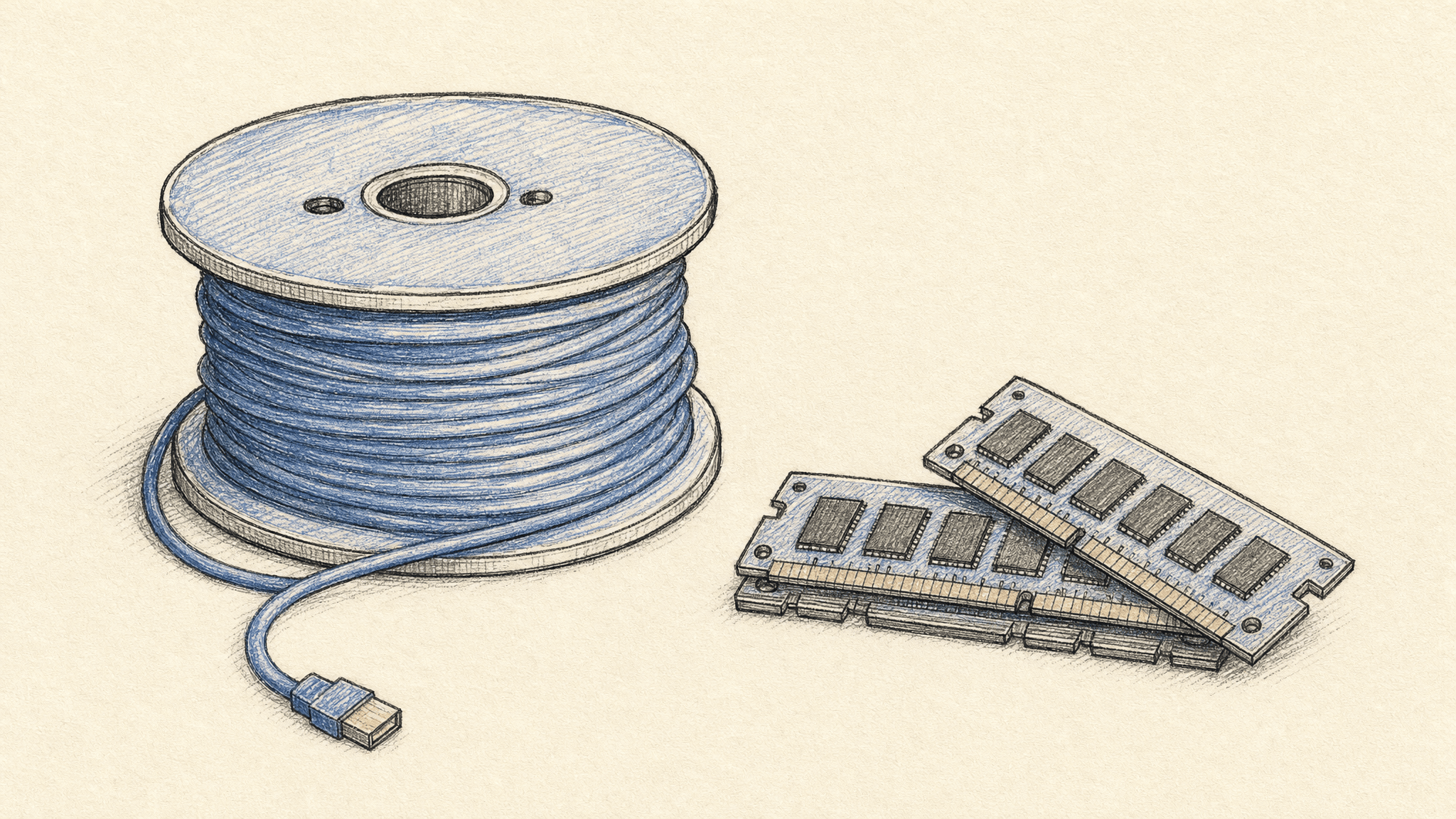
Hugging Face also reports a 2-bit quant tested on a single M3 Ultra Mac with 512 GB, using 304 GB for model weights and reaching 18 tokens per second in its test. That quant isn't evidence a base MacBook can run the full model. TechCrunch's launch report likewise describes the one-terabyte-scale setup for the flagship local demonstration. Budget for memory, storage and the context cache; we have no verified all-in price or throughput for your workload.
Where to Get Weights or a Hosted API
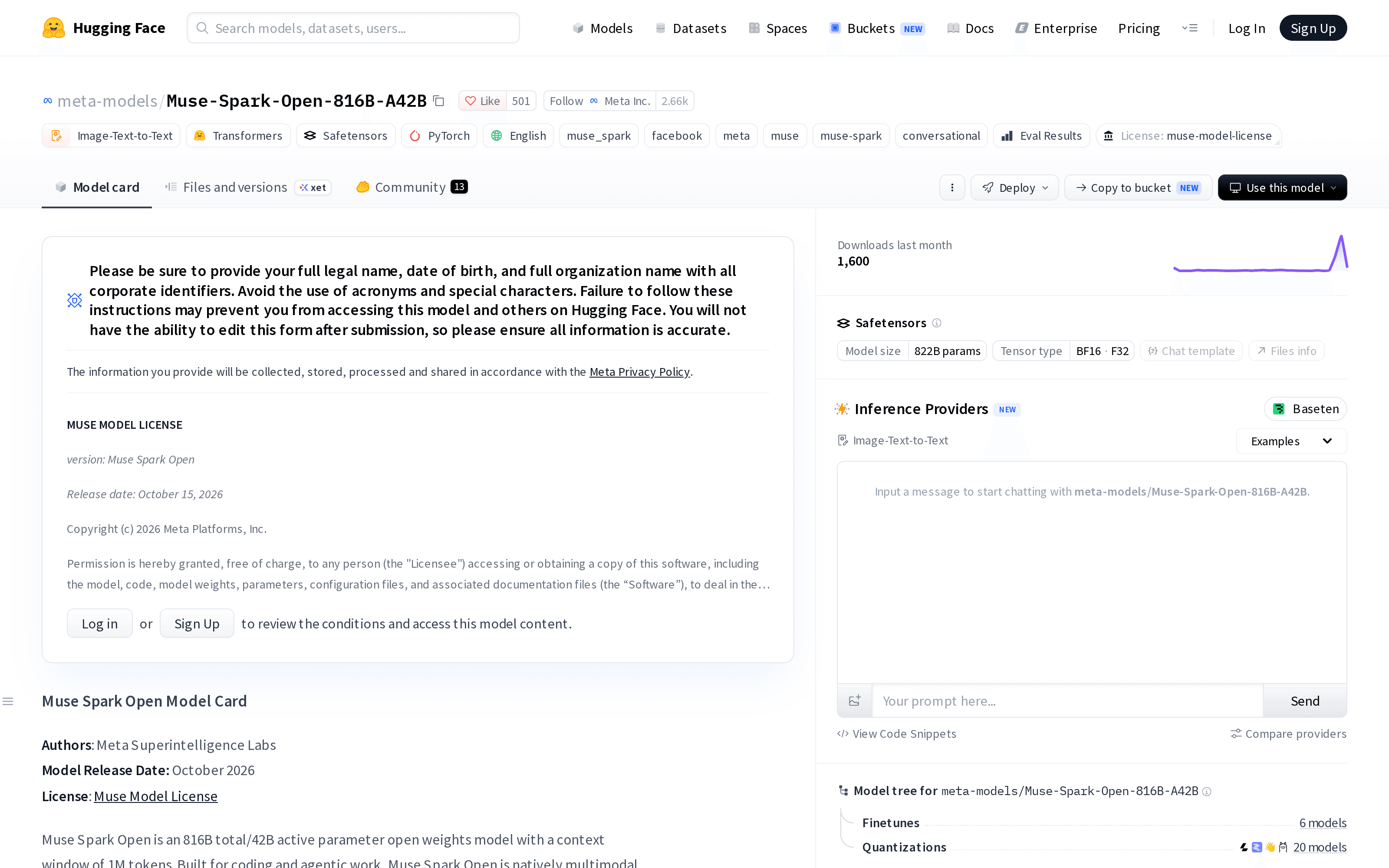
For weights, Meta names its Hugging Face model collection, Amazon SageMaker AI, Google Cloud Model Garden and Microsoft Foundry Models. The BF16 model card is a useful starting point, but the page asks for identity information to review conditions and access content. Access isn't automatic.
For hosted inference, Meta names Baseten, Fireworks AI, Groq, Modal, Nebius, OpenRouter and Together AI. Check each provider's variant, modality support and terms; we didn't test the endpoints or prices. For coursework or a client project, compare an API with an assistant that already handles your workflow. Zentor's value is a transferable workspace memory through MCP, not an assertion that it runs Muse Spark Open. Its pricing page describes a separate service, not a quote for this model.
What the Agent Demonstrations Do and Don't Establish
Meta describes running Muse Code with the model locally to make bug fixes and new features in Ice Cubes, an open-source Mastodon client, including a full build. It also reports a DaVinci Resolve workflow that reviewed footage and cropped it vertically. These are Meta's demonstrations, not our test or a guarantee of autonomous completion.
An agent needs more than model weights: tools, permission boundaries, task state and review before consequential actions. Suppose you ask for a polished brief sourced from last week's notes. You need the right files, a place to check its claims and a destination for the result. Zentor approaches that job through an adaptive workspace and user-owned memory rather than requiring you to choose this particular model. If you need tasks to continue when your computer is off, its always-on workspace addresses a different problem from on-device inference.
The Muse Model License: Read the Conditions
As of October 2026, Meta distributes these weights under its custom Muse Model License, not a standard OSI-approved open-source software license. The published license text grants broad use and modification rights subject to conditions. Among them, products or services using the software or derivatives must prominently display “Built with Muse Spark Open” in the UI or accompanying documentation, site or settings.
A separate condition addresses model-as-a-service businesses: if aggregate gross revenue across the licensee and affiliates exceeds $20 million in any consecutive 12-month period, the licensee must notify Meta and reach a separate written agreement before offering this model or derivatives as part of that business. The text excludes internal use, other commercial activity that isn't model-as-a-service, and components powering a product that isn't model-as-a-service. Don't turn that narrow exception into “free for all commercial uses.” Read the entire license with counsel for an actual deployment.
How It Compares With Other Open Weights
Ask what must stay on your machine, which inputs you need, how much memory you can allocate and whether the license fits. The model handles four input types and up to one million tokens of context, but its full checkpoint demands far more memory than smaller local models. Hugging Face identifies Muse Glimmer as a smaller, dense member of the same family suited to local use; no benchmark here ranks them for your tasks.
FAQ
Are the weights free to use?
Meta provides the weights under a license that allows many uses without a license fee, but compute, hardware and hosted inference can cost money. Check the license conditions and each provider's current charges.
What hardware do I need?
Meta demonstrated two M5 Ultra Mac Studios with MLX. Hugging Face reports a separate 2-bit test on one 512 GB M3 Ultra Mac. A smaller machine isn't established by either test.
Does open-weight mean open source?
Call it open-weight. The custom Muse Model License has conditions; don't confuse downloadable weights with an OSI-approved open-source license.
What can it do as an agent?
Meta reports coding and media-editing workflows using surrounding tools. The weights supply the model, while an agent workflow still needs tools, access controls and a way to check results.

Zentor Research Public data on the AI ecosystem
Zentor Research publishes quarterly data studies on the AI tools ecosystem, drawing on public registries (npm, GitHub, Hugging Face, arXiv, Google Trends). All charts and datasets ship under CC-BY 4.0.
Turn insights into action.
Zentor automates the recurring work your analysis points to. No engineering required.