Claude Marketplace: Connectors, Plugins, and Agents

Claude Marketplace brings connectors, plugins, agents, products, and service partners together. Learn what each category means and who can use it.
Claude Marketplace: Connectors, Plugins, and Agents
Claude Marketplace brings together Claude extensions, Claude-powered products, and implementation help. These are different decisions, not one app store.
Key takeaways
- Connectors access services; plugins package repeatable capabilities and may include connectors.
- Agents and products use a committed-spend sales path, not one-click installation.
- Service partners offer human help. No listing guarantees quality or safety.
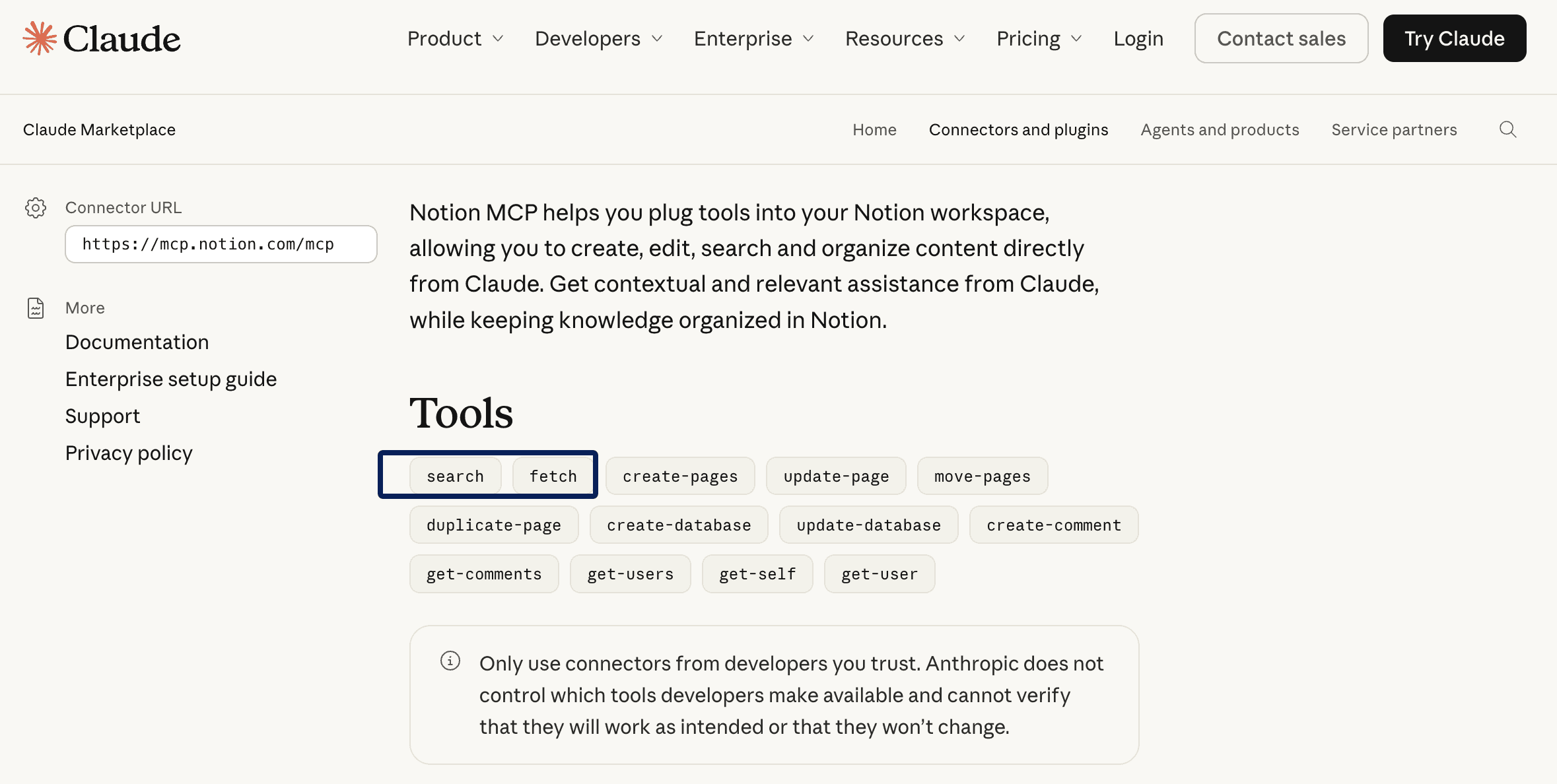
I opened the public directory on October 2, 2026, looking for the difference between a connection and a product. Notion's connector listed search, fetch, and create-pages beside "Add to Claude." Gamma's product listing offered "Request to buy." I inspected public listings only; I did not connect, buy, or test either product's performance.
Quick Answer
Claude Marketplace combines discovery, procurement, and services directories. Use a connector for tool access, a plugin for packaged workflows, an agent or product for separate software, or a service partner for implementation. Anthropic brought these paths together, but each has a different next step.
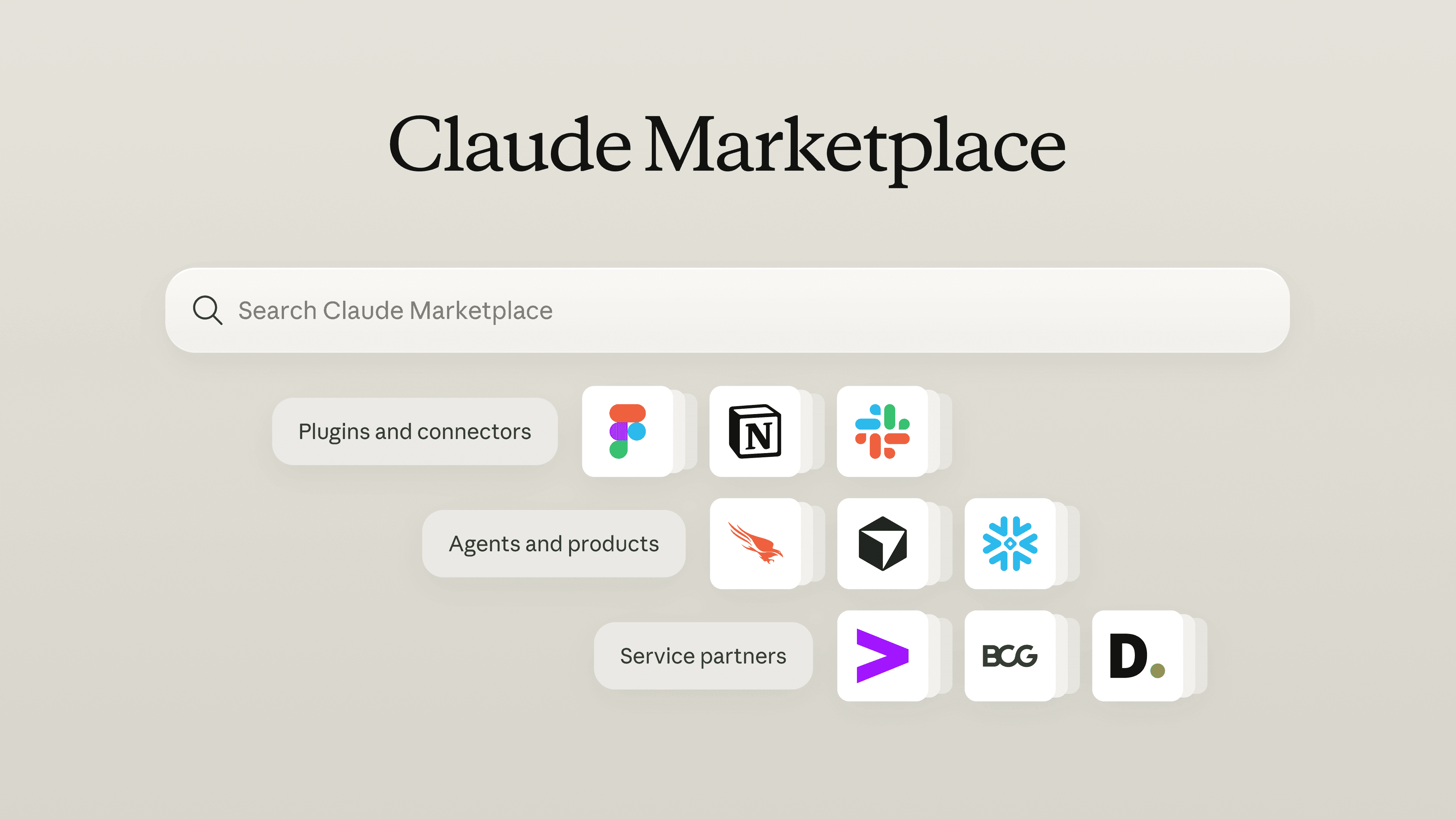
What Claude Marketplace Includes
Connectors and Plugins
Claude Marketplace connectors link Claude to services such as Notion or Slack. In the Notion connector listing, search and fetch sit beside page creation and editing tools. Research could become a write action if permissions allow it.
Claude Marketplace plugins package instructions and capabilities for repeatable work. They can bundle skills, connectors, and sub-agents, though components differ between chat and Cowork. A connector might fetch client files; a plugin might guide how to assemble and review a brief. Plugins currently cover paid Claude plans; connector access follows separate rules. If a plugin includes a connector, inspect the service authorization as well as the plugin's instructions. Packaging does not make the data boundary disappear.
Agents and Products
Claude agents and products are third-party software, not automatically tools inside your Claude chat. The agents and products catalog centers on using an existing Anthropic commitment and "Request to buy." Even if a vendor also has a connector, buying its product is a separate decision. Gamma's listing mentions its Claude connector, for example, yet the product card still leads to sales. Check where the software runs, what it receives, and who supports it.
Service Partners
Claude service partners offer strategy, integration, training, or rollout. The service partner directory filters by region, engagement, and budget. Hiring one is a services agreement, not an agent install. Small teams may not need outside implementation.
How Access and Purchasing Differ by Category
Before opening a listing, ask whether you are authorizing access, adding a workflow, buying software, or hiring expertise. That determines who approves it.
| Category | Typical next step | Approval to plan for |
|---|---|---|
| Connector | Review tools and authorize a service account | Data owner and workspace admin, where required |
| Plugin | Add a package to an account or organization | Workflow owner and plugin admin |
| Agent or product | Request commercial terms | Procurement, budget owner, and security review |
| Service partner | Scope an engagement | Project owner and contract approver |
An Anthropic marketplace listing does not itself entitle anyone to spend an organization's commitment. The public product cards give no universal price or eligibility rule; confirm the purchasing route with your organization. Conversely, a connector's "Add" button is not a product subscription quote. The Claude plan, vendor subscription, and service engagement may create different costs.
Who Claude Marketplace Serves Today
On October 2, 2026, the public catalog displayed 885 connectors, 341 plugins, and 16 agents/products. Those are observed listing counts, not a promise of access in every plan, country, or workspace.
An independent consultant can browse connectors and plugins without procurement. A committed-spend organization has the additional purchasing path. If colleagues see different options, check plan, admin policy, platform, and region. Catalog counts do not measure quality.
What to Check Before You Add or Buy Anything
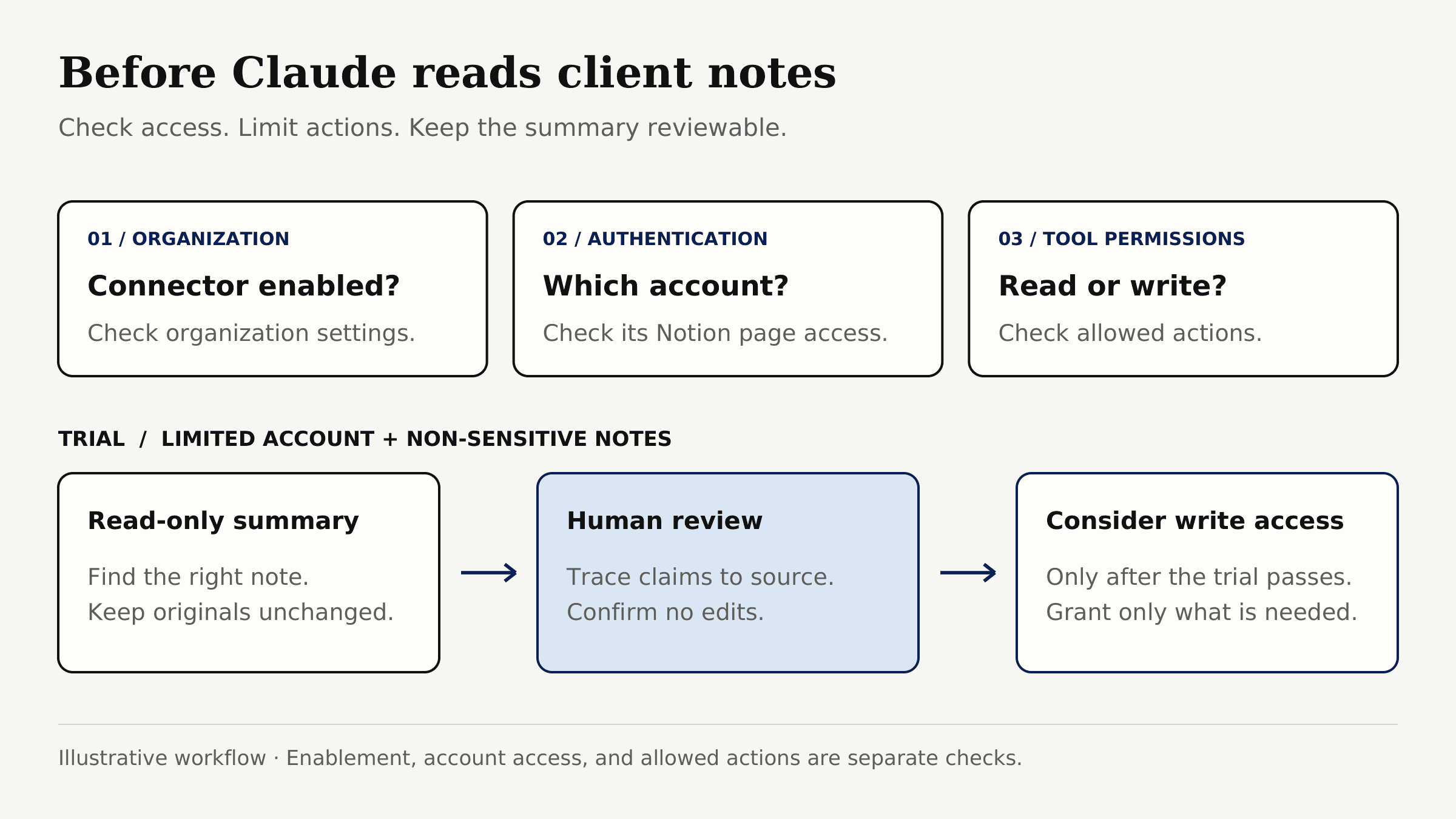
Suppose Claude must summarize client notes from Notion. Which pages can the connected account see? Can Claude change them? Who reviews the summary? Connector controls separate organization enablement, individual authentication, and tool permissions. A polished listing cannot replace these checks.
For plugins, inspect included instructions and write-capable services. For products, request pricing, data terms, and support ownership. For partners, agree on deliverables. Start sensitive workflows with a limited account and non-sensitive test data. A useful trial has a visible pass condition: can the tool find the right note without editing anything, and can a reviewer trace the result back to its source? Only then consider granting write access.
What the Marketplace Does Not Standardize
The storefront does not standardize setup, billing, retention, or review. The Notion listing warns that third-party tools may change or fail, despite its badge. Treat "verified" as a directory signal, not proof of client-data safety. A connector reaches a source; persistent project context across tasks is a separate workspace decision.
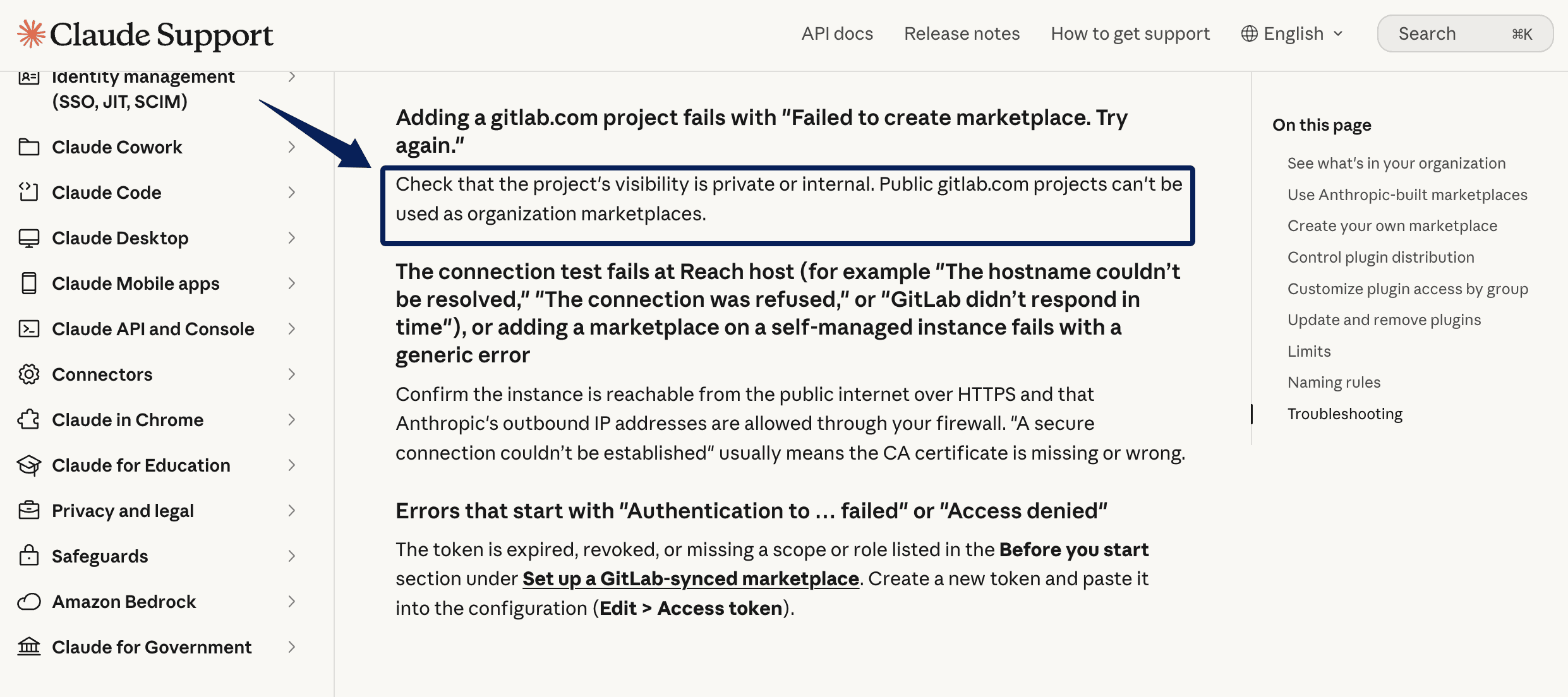
Organizations can run private plugin marketplaces, but not private copies of every public category. Record what was approved and what must be removed when the workflow ends.
FAQ
Can a Marketplace Connector's Tools Change After You Add It?
Yes. A public listing shows available tools, but the Notion listing warns that developer-provided tools may change or fail. Recheck tool permissions after a change, especially before allowing write or delete actions.
Can a Plugin Be Available to One Team Only?
On Enterprise plans, owners can set plugin access by group. Check users who belong to multiple groups: the most permissive applicable group setting takes precedence, so hiding a plugin from one group may not hide it from those users.
Can an Admin Allow Connector Reads but Block Writes?
Yes. Team and Enterprise owners can configure connector tool permissions to allow reading while requiring approval for, or blocking, write actions. The connected service's own account permissions still apply.
Can a Marketplace Purchase Move Between Anthropic Accounts?
Do not assume so. No public self-service transfer is promised. Confirm account ownership and contract terms with sales before purchasing, especially if the buyer and daily users belong to different organizations.
Does Removing a Connector Erase Past Claude Conversations?
No. Disconnecting ends future access, but deleting conversations is separate and depends on account retention settings. Check both during offboarding.
Choose the Right Marketplace Path
The shared directory makes discovery easier. It does not collapse data access, workflow installation, procurement, and service contracts into one decision. Choose the category first, then approve the commitment that actually follows.

Zentor Editorial Zentor editorial team
The Zentor editorial team writes about workflow automation, AI agents, and the tools we build. Default byline for industry overviews, listicles, and collaborative pieces.
Ready to put this into practice?
Zentor runs browser tasks, research, and schedules automatically. Try it free.