How to Write a Thank You Email: 7 Templates
Learn how to write a thank you email with seven complete templates for interviews, professors, clients, referrals and offers, plus timing and subject tips.
How to write a thank you email that someone actually wants to read: thank them for a specific action, name one detail from your conversation, and close with a next step only if one is needed. For job interviews, UC Davis Career Center recommends sending it within 24 hours. The seven complete emails below cover an interview, a panel, a professor, a client, a networking chat, a small favor, and an offer. Replace every bracketed detail with something true before you send.
Key Takeaways:
- After an interview, send a short, individual note promptly; UC Davis and Berkeley recommend within 24 hours.
- Put your name and the occasion in the subject line, then recall a detail the recipient will recognize.
- An email to a professor or client needs a different next step from an interview note.
- Copy a full template below, but never copy the same personal detail into different recipients' messages.
When to Send a Thank You Email
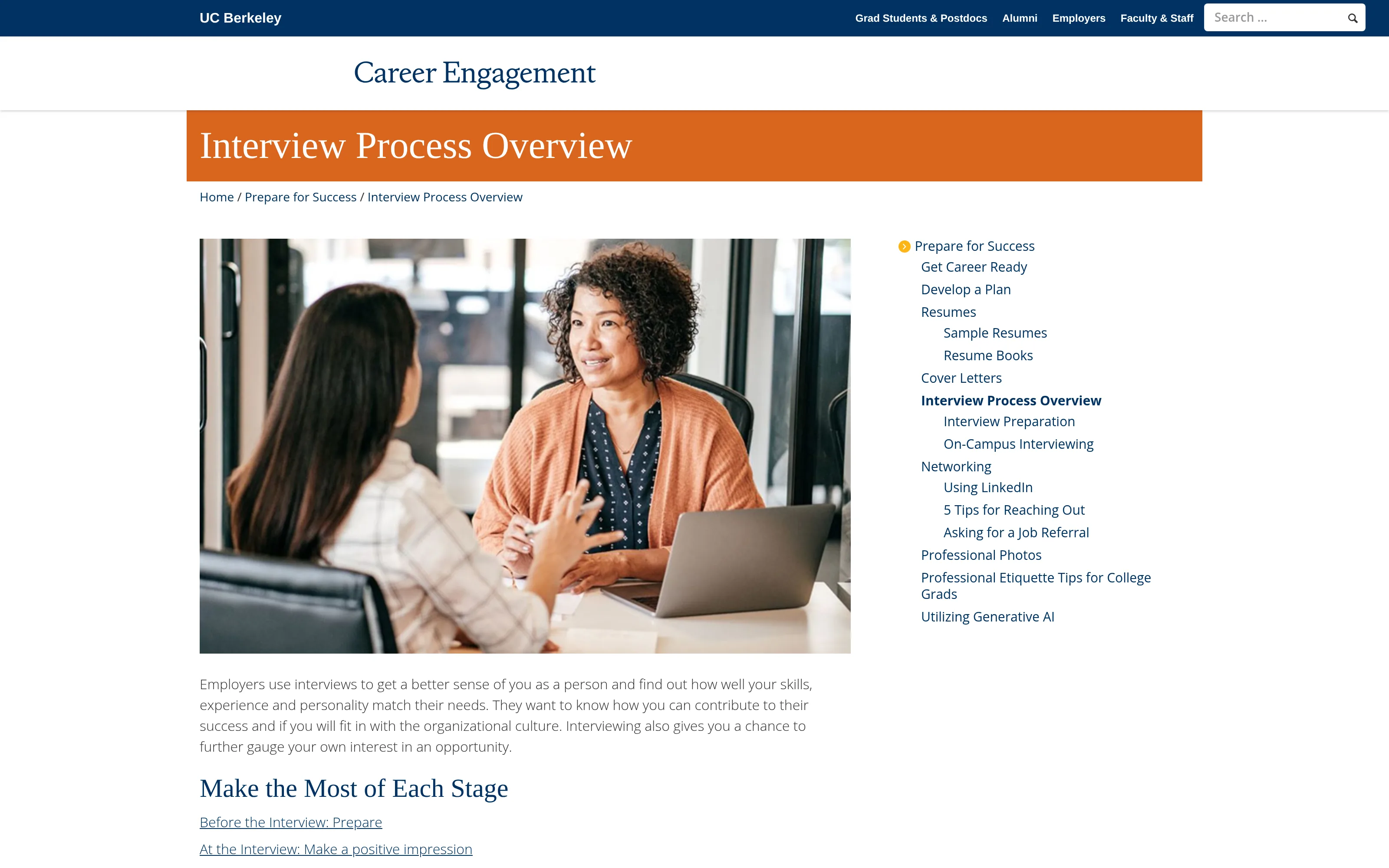
Send an interview thank-you email within 24 hours when you can. UC Berkeley Career Engagement gives the same guidance and recommends referring to something that stood out in the interview. For an informational conversation, Berkeley's separate guidance allows one or two days. These recommendations concern different situations; neither is a universal deadline for thanking a client or professor.
Why bother? In a TopResume survey published in 2017, 68% of 358 recruiters and hiring managers said receiving a thank-you note affected their decision, and 16% reported dismissing a candidate for not sending one. An Accountemps survey reported by Robert Half in 2017 said 80% of more than 300 HR managers considered thank-you messages in hiring. Those are dated, self-reported survey findings, not a prediction about your particular application in 2026. The practical case is simpler: a timely note gives you another chance to identify what you heard and why you fit.
Make the reply sound like you
Zentor can draft Gmail replies using the context of your conversation. You review before anything goes out.
Start free trial →
The 5 Parts Every Thank You Email Needs
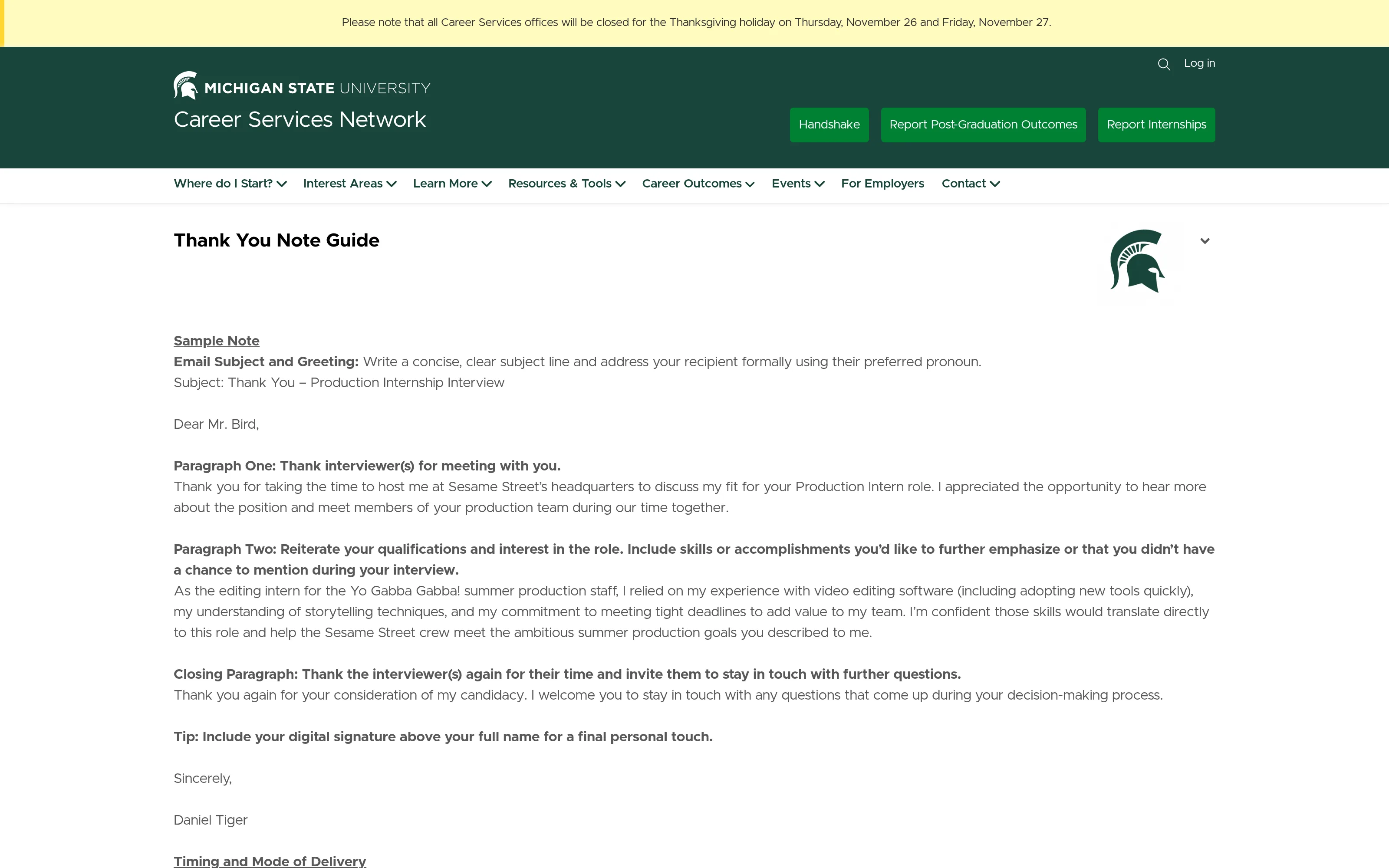
A useful note does five jobs without sounding like a checklist. Its subject tells the recipient what the email concerns; add your name when the relationship is new. Its greeting identifies the right person. Its opening thanks names an actual action, such as reading your draft or explaining a role. A specific detail shows you listened, while the ending says whether you will do something next or simply appreciate their time. The Michigan State University Career Services guide illustrates that interview structure with a concise subject, personal reference, relevant qualifications and a courteous closing.
Don't manufacture intimacy. “Your suggestion to reorganize my research question helped me revise the introduction” is useful if that happened. “It was inspiring to learn about your amazing organization” tells the recipient nothing.
For a student handling internship correspondence alongside classes, Zentor can draft a Gmail reply from the thread for your approval. Check the detail against your notes.
Template 1: Thank You Email After a Job Interview
Use this after a first-round or individual interview. Before pasting, replace the discussion point and your relevant skill with your actual words. UC Davis advises referring to what you learned about the position and organization, not simply repeating your résumé.
Subject: Thank you for the [Role] interview: [Your Name]

Dear [Interviewer Name],

Thank you for speaking with me about the [Role] position at [Company]. I appreciated hearing how your team approaches [specific project or responsibility discussed].

Our conversation about [specific point] made me more interested in the role. My experience with [relevant skill or example you actually discussed] would help me contribute to [related responsibility].

Thank you again for your time. I would be glad to answer any further questions.

Best,
[Your Name]
[Contact Information]
Template 2: Thank You Email After a Final or Panel Interview
A panel isn't one anonymous recipient. If you have each interviewer's address, send each person a separate note with a different detail from their part of the conversation. If you only have the coordinator's address, write to that person and ask them to pass along your thanks; don't guess private addresses. Berkeley recommends thanking the primary contact and extending appreciation to other panel members.
Subject: Thank you for the [Role] conversation: [Your Name]

Dear [Interviewer Name],

Thank you for meeting with me during the final interview for [Role] at [Company]. Your question about [specific topic this interviewer raised] gave me a clearer picture of the work your team needs to do.

I especially appreciated your explanation of [distinct detail from this person's conversation]. It connects with my experience in [truthful relevant example], and I remain interested in joining the team.

Please let me know if I can provide anything else as you make your decision. Thank you for your time and consideration.

Best,
[Your Name]
[Contact Information]
Template 3: Thank You Email to a Professor
Use this when a professor reviewed a draft, explained a concept, wrote a recommendation or made time to discuss your plans. Tell them what the help changed. A student who asked for comments on a thesis proposal, for example, should name the section they will revise rather than send a generic “Thanks for everything.” Don't claim a result you haven't achieved yet.
Subject: Thank you for your feedback on [Course or Project]: [Your Name]

Dear Professor [Last Name],

Thank you for taking the time to discuss [assignment, research question, or recommendation] with me. Your point about [specific feedback] helped me see where my explanation needed work.

I plan to revise [actual section or next step] using your suggestion. I also appreciated your willingness to [other help, if applicable].

Thank you again for your guidance this term. I will follow up with [specific item] if that would be useful.

Best,
[Your Name]
[Course or Program, if helpful]
Template 4: Thank You Email to a Client After a Meeting or Project
For a solo service provider, “thank you” can also confirm what happens next. That doesn't mean turning a courteous note into a sales pitch. If you discussed a deliverable, name the agreed deliverable and deadline only when both were actually agreed. For a completed project, replace the next-step paragraph with a simple handoff and let the client decide whether to continue working with you.
Subject: Thank you for today's [Project] meeting: [Your Name]

Hi [Client Name],

Thank you for making time to discuss [Project]. Your explanation of [specific requirement or preference] helped me understand what matters most for the next draft.

As agreed, I will [actual next action] and send it by [agreed date]. If I have misunderstood [point requiring confirmation], please correct me before I proceed.

I appreciate the chance to work with you on this. Thank you again for the clear direction.

Best,
[Your Name]
[Business Name, if applicable]
Template 5: Thank You Email After a Networking Chat
An informational chat isn't a disguised job interview. Berkeley's informational-interview guide says to thank the person within one or two days, refer to the information they shared and avoid asking for a job. You can say what you will read or try next without implying they owe you another introduction.
Subject: Thank you for our conversation about [Field]: [Your Name]

Hi [Contact Name],

Thank you for taking time to speak with me about your work in [Field]. Your description of [specific advice or experience] gave me a better way to think about [question you asked].

I am going to [real next action, such as read a suggested resource or revise a portfolio]. I appreciated your candor about [another true topic, if relevant].

Thank you again for sharing your perspective. I hope we can stay in touch.

Best,
[Your Name]
[Contact Information]
Template 6: Short Thank You Note for a Quick Favor or Referral
A quick favor deserves a proportionate message. If someone forwarded your work, introduced a customer or sent a useful link, name that action and avoid an elaborate speech. When a referral hasn't produced a result yet, don't claim it did. This template leaves the outcome open.
Subject: Thank you for [the introduction or specific favor]: [Your Name]

Hi [Name],

Thank you for [specific favor], especially [small detail that made it helpful]. I appreciate you taking the time to help me connect with [Person or Opportunity, if applicable].

I will [actual next action, if any]. I know you did not have to make that introduction, and I am grateful.

Best,
[Your Name]
Template 7: Thank You Email After Receiving an Offer
Thank the sender promptly and say what you are actually ready to say. Acceptance, a request for time and a request for clarification are different messages. This version acknowledges the offer without pretending you have accepted. Replace its second paragraph with an explicit acceptance only if you have decided and reviewed the terms.
Subject: Thank you for the [Role] offer: [Your Name]

Dear [Hiring Manager Name],

Thank you for offering me the [Role] position at [Company]. I appreciate the time you and the team spent explaining [specific part of the role or process].

I am reviewing the offer details and will respond by [agreed decision date]. Could you please clarify [specific term, if you have a question]? If there is nothing to clarify, I will follow up by the date we discussed.

Thank you again for the opportunity.

Best,
[Your Name]
[Contact Information]
Common Thank You Email Mistakes to Avoid
How to write a thank you email without sounding mechanical? A subject line that says only “Thank You” could refer to almost anything. “Thank you for the [Role] interview: [Your Name]” gives the recipient a handle on the thread. Reply in an existing thread if clearer.
Don't wait days after an interview because you're hunting for the perfect line. The UC Davis and MSU career guides both recommend sending within 24 hours. More importantly, don't send the exact same body to several panelists: an interviewer who asked about research methods shouldn't receive a note thanking them for a conversation about scheduling if that happened with someone else. Berkeley's interview guide recommends recalling a distinctive part of the exchange.
Finally, check the recipient, greeting, role title and any promised date. Read the message once without the template placeholders; if any bracket survives, don't send it. Zentor’s Gmail email assistant can draft from thread context; you still approve and check the facts.
FAQ: Thank You Email Timing, Format and Subject Lines
How soon should I send a thank you email after an interview?
Within 24 hours is the recommendation from UC Davis Career Center, MSU Career Services and UC Berkeley Career Engagement. If you missed the window, a thoughtful note with a real detail is better than silence. For a networking conversation, Berkeley says within one or two days.
Should I send an email or a handwritten note?
Email is usually the quicker way to reach someone after an interview. In its 2017 Accountemps survey, Robert Half reported that 94% of HR managers considered email an appropriate method, versus 86% for a handwritten note. If a handwritten note feels right, it can be an additional gesture rather than a reason to miss a short decision window.
Should I send one thank you email to each interviewer?
If you have their addresses, send separate notes that reflect each person's contribution. If not, thank the primary contact and ask them to relay your appreciation, as Berkeley's guidance suggests. Don't guess an address or claim a conversation you didn't have.
What subject line should I use for a professional thank you email?
Use the occasion plus your name: “Thank you for the [Role] interview: [Your Name],” “Thank you for your [Course] feedback: [Your Name],” or “Thank you for the [Project] conversation: [Your Name].” Then replace the brackets.
Zentor Editorial Zentor editorial team
The Zentor editorial team writes about workflow automation, AI agents, and the tools we build. Default byline for industry overviews, listicles, and collaborative pieces.
Ready to put this into practice?
Zentor runs browser tasks, research, and schedules automatically. Try it free.